
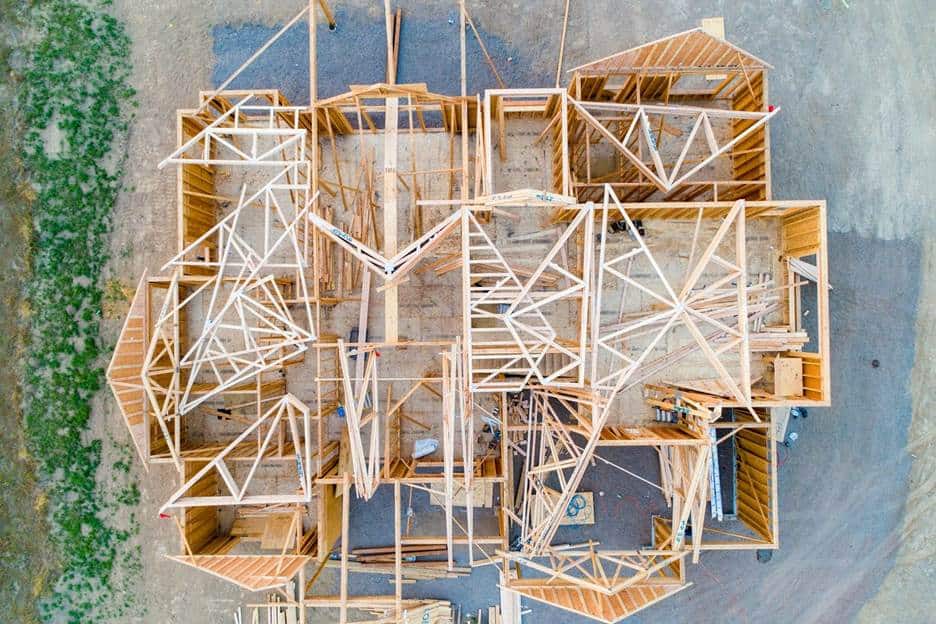

A termite barrier, now usually called a termite management system, is a physical or chemical layer built into a new home to stop subterranean termites from reaching the timber inside without being seen. It goes in before and during the slab pour, and once the house is finished, most of it disappears from view.
That is exactly why so many new owners in Sydney’s south-west know so little about it. This guide covers what the rules require, which systems builders use, what to ask before you sign and how to keep the protection working for years after handover.
Why the south-west keeps termite installers busy
Sydney’s outer south-west is one of the busiest building zones in the country. Paddocks around Austral, Leppington and Oran Park have turned into streets of brand-new homes in just a few years.
The numbers show how fast it is moving. According to ABS data, the Austral – Greendale area grew by 3,100 people in 2024-25, one of the largest increases in New South Wales.
New estates mean disturbed soil, cleared bushland and a lot of fresh timber framing going up at the same time. Termite colonies that lived in old fence posts and tree stumps do not simply vanish when the bulldozers arrive.
That is why the building rules take termites seriously. Under the National Construction Code, a house built in an area where subterranean termites are a known risk needs a termite management system when its primary building elements, such as a timber frame, are susceptible to attack. The system has to be chosen from the code’s accepted options and installed to the relevant Australian Standard.
What to ask your Sydney home builder about termite protection
Most buyers spend hours choosing facades and benchtops and only a few minutes on the termite system. Those priorities are worth flipping, at least for one meeting.
When you sit down with Everyday Homes, a family-owned home builder in Sydney, the conversation should cover more than floor plans. The Prestons-based builder works across south-west estates including Austral, Leppington, Edmondson Park and Oran Park, and it promotes structural elements built above minimum Australian standards along with a fixed-price period and a construction timeline guarantee. Clarendon Homes, Rawson Homes and McDonald Jones Homes also sell house and land packages across the same growth corridors, so it pays to compare how each one handles termite protection in its standard inclusions.
Good questions to ask any builder:
- Which system is included? Physical, chemical or a combination.
- Is it a full or partial system? Some homes protect the whole slab, others only the penetrations and perimeter.
- Who installs it? A licensed pest professional or a specialist subcontractor.
- What paperwork will you receive? You want a durable notice and a certificate that names the system.
- What does the warranty require from you? Many warranties depend on regular inspections.
The main systems used on new homes
Not every system suits every block. These are the options you are most likely to see on a south-west build:
- Slab edge exposure. Part of the concrete slab edge is left visible so termites must build mud tubes out in the open.
- Stainless steel mesh. A fine mesh termites cannot chew through, fitted around pipes and joints in the slab.
- Graded stone. Crushed stone sized so termites cannot move the particles or squeeze between them.
- Sheet membranes and collars. Physical layers that sit under or around the slab and service penetrations.
- Chemical soil treatment. A treated zone in the soil, sometimes with a reticulation system that lets it be topped up later.
Many builders combine two or more of these. A mesh collar at every pipe plus an exposed slab edge is a common pairing.
A barrier is not a force field
This is the part most new owners misunderstand. A termite management system is designed to stop termites from sneaking into the house through hidden routes. It does not make the whole property termite-proof.
A homeowner guide from Queensland’s building regulator, the QBCC, is direct about it. Installing a barrier will not stop termite activity on the site, and bridging or breaching the system can let termites into the building undetected and void warranty and insurance entitlements.
In other words, the barrier buys you visibility. Your job is to keep it that way.
Keep the protection working after handover
The biggest threats to a new system usually come from the owner, not the termites. A few habits make a real difference:
- Never cover the slab edge. Garden beds, mulch, pavers and soil built up against the house can hide the exposed edge.
- Keep timber off the ground. Stored firewood, old formwork and sleepers near the house invite colonies closer.
- Fix leaks fast. Dripping taps, leaking hot water units and blocked gutters create damp spots.
- Book regular inspections. Most warranties require them, and early detection is far cheaper than repairs.
Moisture deserves extra attention. The Australian Museum notes that subterranean termites get most of their water from the soil and can only become pests in buildings where a constant water source is available. A leaking pipe under a new house is an open invitation.
A simple timeline for buyers
If you are building in the south-west, this sequence keeps termite protection on track:
- Before contract. Ask which system is included and get it in writing.
- Before the slab pour. Check that the installer is booked and any pipe collars are on site.
- At handover. Collect the durable notice, certificate and warranty terms.
- After landscaping. Walk the perimeter and make sure nothing bridges the slab edge.
- Every year after. Book a professional termite inspection.
The bottom line
New homes in Sydney’s south-west are built fast, and termite protection is easy to overlook in the rush. It is also one of the few parts of the house you cannot easily add later.
Ask the right questions before you sign, understand which system you are getting and treat the barrier as something to maintain rather than forget. Your new home will be better protected for it.