According to the Cat Fanciers’ Association’s official Siamese breed profile, the Siamese is “unsurpassed by any other breed in its ability to communicate with humans” and has been one of the most consistently registered breeds since CFA’s founding in 1906 – a longevity in popularity that speaks directly to what owners who choose devoted, social breeds are looking for.
The Burmese and Siamese share that same appeal: both are deeply affectionate, highly intelligent, and oriented toward their owners in ways most domestic cats are not. They also share genetic ancestry – the modern Burmese traces directly to an early cross with a Siamese. Yet the difference between Burmese and Siamese cats in daily life is significant, and choosing the wrong one for your household is a mismatch that owners feel immediately.
The Burmese vs Siamese cat decision is not a question of which breed is more devoted – both form deep, lasting bonds with the people they live with. It is a question of how that devotion sounds, feels, and demands to be met every day.
What Is the Difference Between Burmese and Siamese Cats in Appearance?
The visual distinction between Siamese and Burmese cats is immediate and consistent – two breeds from the same Southeast Asian origins that developed into entirely different physical expressions.
Siamese cat physical traits:
- Build: Angular, long-bodied, with a distinctive wedge-shaped head and fine bone structure
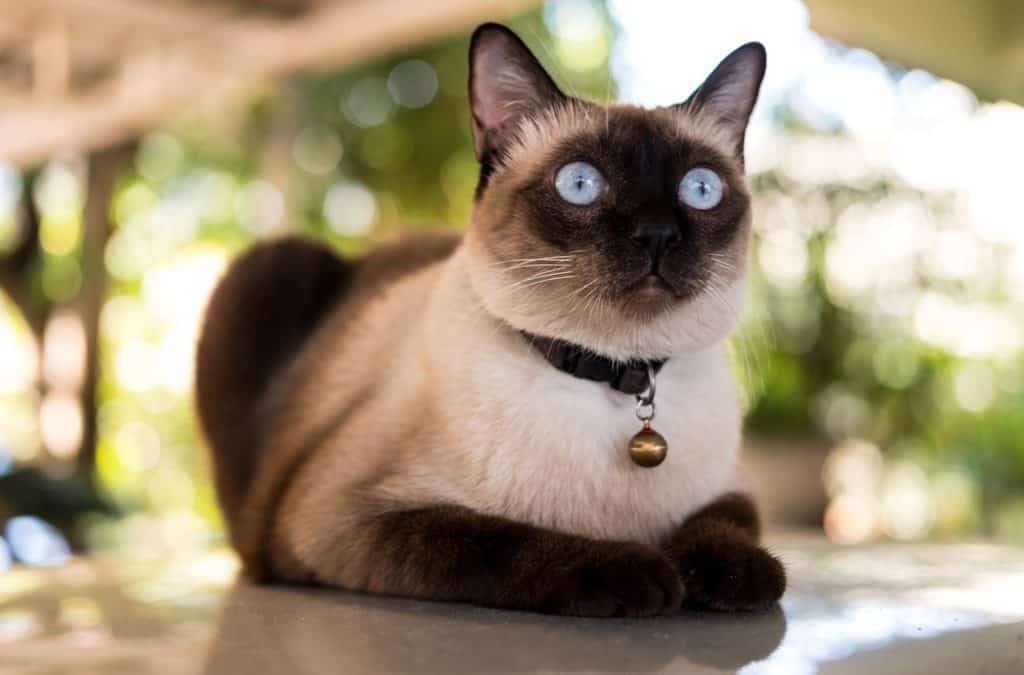
- Coat: Short, pale-bodied with darkly colored points on the ears, face, paws, and tail – a pattern caused by a temperature-sensitive enzyme that restricts pigment to the cooler extremities
- Eyes: Almond-shaped, vivid blue – one of the most recognizable features in the domestic cat world
- Overall impression: Elegant, sleek, and striking at a distance
Burmese cat physical traits:
- Build: Compact, rounded, and cobby – deceptively muscular and heavier than it appears when picked up
- Coat: Short, solid-colored throughout – most famously sable brown, with champagne, blue, and platinum also recognized across breed standards
- Eyes: Large, rounded, gold to yellow – warm and expressive rather than dramatic
- Overall impression: Plush, substantial, and immediately approachable
The contrast between the two is one of the clearest in any breed comparison: where the Siamese is defined by length, angularity, and contrast, the Burmese is defined by roundness, solidity, and warmth. Both coats are short and low-shedding, requiring only weekly brushing – the practical difference between them is entirely structural.
Coat and Physical Structure at a Glance
Both breeds carry short, low-shedding coats requiring minimal grooming – weekly brushing is sufficient for either. The practical distinction is structural. The Siamese’s long, lean lines reflect its origins as a natural Southeast Asian landrace cat, first documented in the Ayutthaya period of Thai history between 1350 and 1767. The Burmese’s rounded, cobby build reflects the outcrossing that shaped the American breed standard after its introduction to the U.S. in the 1930s.
How Do Burmese and Siamese Cats Differ in Personality?
Burmese Cat Temperament
The Burmese cat is a physically affectionate, proximity-seeking cat that the National Alliance of Burmese Breeders has formally nicknamed the “ultimate companion cat.” Its devotion expresses itself through consistent physical closeness: following owners between rooms, settling into laps, initiating contact throughout the day. Its voice is soft and musical, present enough to communicate, quiet enough to live with comfortably. Burmese cats maintain kitten-like playfulness well into adulthood and form attachment bonds that owners consistently describe as dog-like in their loyalty and specificity.
Siamese Cat Temperament
The Siamese cat expresses devotion verbally and interactively. It narrates household life, comments on its owner’s activities, and makes its needs and preferences known with a persistent vocal quality that the CFA’s breed profile describes as “communicating with humans” as the breed’s defining characteristic. Siamese cats monitor their owners’ schedules, react to emotional changes, and become visibly distressed when ignored or left alone for extended periods. Their affection is active, expressive, and demanding in the best possible sense for owners who want that level of engagement.
How Do Siamese and Burmese Cats Compare Across Key Factors?
| Factor | Burmese Cat | Siamese Cat |
| Build and appearance | Compact, rounded, solid-colored | Angular, long-bodied, pointed coat |
| Eye color | Gold to yellow | Vivid blue |
| Vocalization | Moderate – soft and musical | Very High – loud and persistent |
| Affection style | Physical, lap-seeking, quiet | Verbal, interactive, attention-demanding |
| Energy level | Moderate-High | Moderate-High |
| Apartment suitability | Excellent | Good (noise level worth considering) |
| Grooming | Weekly brushing | Weekly brushing |
| Primary health concerns | HCM, hypokalemia | HCM, progressive retinal atrophy |
| Lifespan | 15-18 years | 15-20 years |
| Best for | Owners wanting quiet physical closeness | Owners who enjoy vocal, active engagement |
What Are the Health Considerations for Each Breed?
Both breeds are generally robust with above-average lifespans relative to most pedigree cats. The differences are breed-specific rather than one being broadly healthier than the other.
Burmese cats carry a documented predisposition to hypokalemia – a genetic condition causing episodic muscle weakness for which a DNA test is available. Responsible breeders screen for this routinely. Hypertrophic cardiomyopathy (HCM) is a secondary concern shared with most cat breeds. Burmese head defect (BHD), a craniofacial abnormality, is something responsible breeders actively select against.
Siamese cats carry a predisposition to progressive retinal atrophy (PRA), which can progress to blindness and for which genetic testing is available. HCM monitoring from age 5 is the standard recommendation for this breed as well.
For both breeds, the most impactful health decision a buyer can make is sourcing from a breeder who conducts the relevant genetic testing – hypokalemia and BHD screening for Burmese, PRA screening for Siamese, and can provide written documentation before purchase.
Two Devoted Breeds, One Clear Choice for Your Household
The Decision That Comes Down to How You Want to Be Loved
The Burmese vs Siamese cat choice ultimately comes down to a single honest question: do you want your cat’s devotion felt through warm, consistent physical presence – or heard through vocal, expressive, communicative engagement?
The Burmese suits owners who want to be followed quietly, sat on willingly, and accompanied through daily life by a cat whose affection is steady and physical. The Siamese suits owners who want a genuine conversational partner – a cat that responds, comments, and ensures it is never overlooked, with an expressiveness that no other domestic breed quite replicates.
Both are among the most devoted cats available, with the Burmese often serving as a calming ESA and the Siamese offering vocal, active emotional support. Neither tolerates solitude or low-interaction households well. And for owners ready to give as much as these breeds offer, either one delivers a depth of companionship that makes the choice between them the most pleasant kind of problem to have.
Frequently Asked Questions
What is the main difference between Burmese and Siamese cats in personality?
The core difference is how their devotion is expressed. Burmese cats are physically affectionate and relatively quiet. They follow, sit close, and initiate contact without persistent vocalization. Siamese cats are verbally expressive and actively demanding. They communicate consistently, make their preferences known audibly, and ensure their owners remain engaged. Both form deep bonds; the daily experience of those bonds sounds and feels very different.
Which is better for apartment living – a Burmese or Siamese cat?
Both adapt to apartment living, but the Burmese is more practical for apartment dwellers with nearby neighbors. Its moderate, soft vocalization is significantly less likely to cause noise issues than the Siamese’s persistent vocal communication. Both breeds need consistent human interaction and do not tolerate extended daily solitude well, regardless of living space size.
Are Burmese cats related to Siamese cats?
Yes, directly. The modern Burmese breed traces to a 1930 cross between a small brown cat named Wong Mau and a Siamese, conducted by Dr. Joseph Thompson in the U.S. This shared ancestry explains their temperamental similarities: the social intelligence, the dislike of solitude, and the strong owner attachment. The physical and vocal differences reflect decades of independent breed development that followed.
Which breed is healthier – a Burmese or a Siamese cat?
Both are robust with long lifespans, and neither is broadly healthier than the other. Burmese cats carry a breed-specific risk of hypokalemia and Burmese head defect; Siamese carry a risk of progressive retinal atrophy. Both share HCM as a general concern. The most meaningful health variable is whether the individual breeder screens for these conditions and provides documentation, not which breed has fewer concerns overall.
Can a Burmese cat and a Siamese cat live together?
Yes, and the pairing often works well. Both breeds are social, dislike solitude, and benefit from feline companionship when owners are away. Their similar energy levels and social needs make them compatible housemates. A gradual introduction over two to three weeks is recommended regardless of individual temperament, and providing separate resources during the adjustment period reduces friction between two cats with strong personalities.