
There are few household discoveries more unsettling than realising you may be sharing your bed with something you cannot see. Bed bugs are masters of concealment, small enough to hide in the seam of a mattress or the crack of a skirting board, and nocturnal enough to go about their business entirely undetected for weeks. By the time most people confirm an infestation, it has often been established for far longer than they realise.
The good news is that bed bugs, despite their elusiveness, do leave evidence. Knowing what to look for — and where to look — can mean the difference between catching a minor problem early and facing a full-scale infestation that requires professional intervention. Here is everything you need to know about how to spot an infestation early before they become a serious problem.
What Are Bed Bugs?
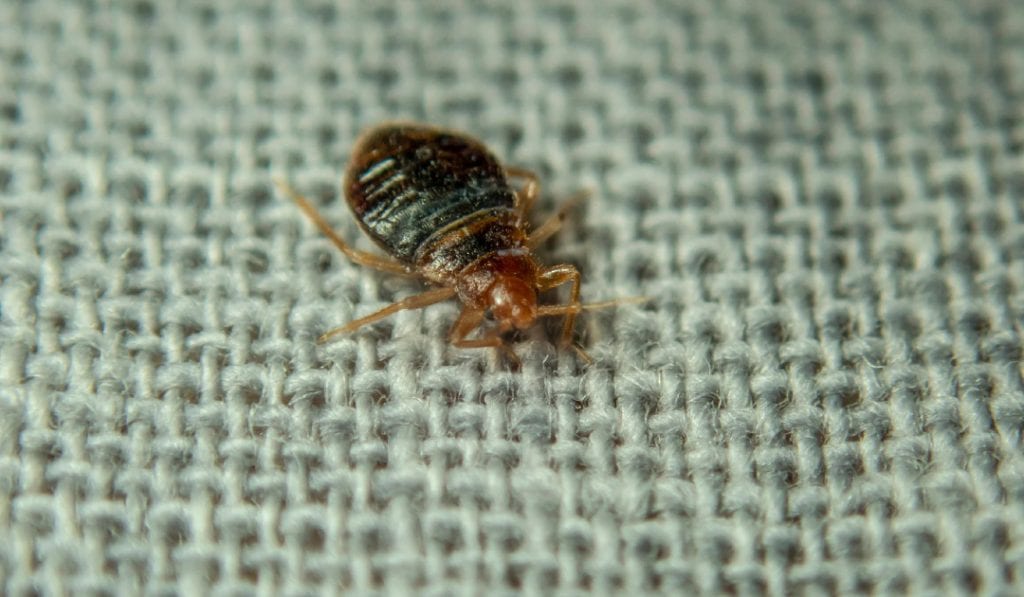
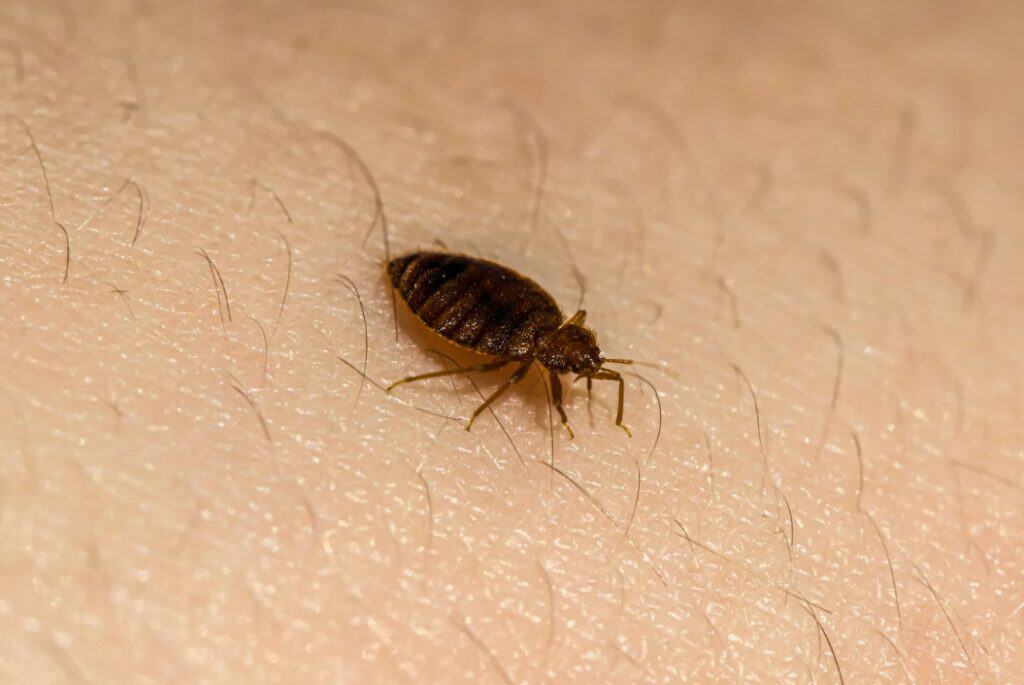
Before identifying the signs, it helps to understand what you are dealing with. Bed bugs (Cimex lectularius) are small, flat, oval-shaped parasitic insects that feed exclusively on blood — preferably human. Adult bed bugs are roughly the size of an apple seed, ranging from 1mm to 7mm in length, and are reddish-brown in colour. After feeding, they swell and darken noticeably.
They do not fly or jump. They spread by travelling on luggage, clothing, second-hand furniture, and bedding — which is why hotels, holiday rentals, and busy transport hubs are common points of origin for infestations. Once inside a home, they multiply quickly, with a single female capable of laying up to five eggs per day.
Early Sign #1: Unexplained Bites on Your Skin
For many people, the first indication that something is wrong is waking up with bites they cannot explain. Bed bug bites typically appear as small, red, itchy welts — often in a line or clustered pattern, which distinguishes them from the more random distribution of mosquito bites. They commonly appear on exposed skin during sleep: arms, shoulders, neck, and legs.
However, bites alone are an unreliable diagnostic tool. According to Bed Bug Specialist, not everyone reacts to bed bug bites — some people show no marks at all — and the bites are easily confused with those of other insects, or with skin conditions such as eczema or hives. If you are waking up with unexplained irritation, treat it as a prompt to investigate further rather than a confirmed diagnosis on its own.
Early Sign #2: Blood Stains on Your Bedding
Small rust-coloured or reddish-brown spots on your sheets, pillowcases, or mattress are one of the clearest early indicators of bed bug activity. These stains occur when a feeding bed bug is accidentally crushed as you move during sleep, or when a bite site continues to bleed slightly after the bug has fed.
Check the areas where you sleep most frequently — around your pillow, the upper edges of the mattress, and any folds or seams in your bedding. Even tiny spots, no larger than a ballpoint pen mark, are worth investigating. Fresh stains will be reddish; older ones oxidise to a darker brown.
Early Sign #3: Dark Spots and Faecal Marks
Bed bugs leave behind faecal deposits wherever they congregate — and these are often easier to spot than the insects themselves. Look for small dark brown or black spots roughly the size of a ink dot. Unlike a dirt smear, these marks tend to bleed slightly into fabric fibres when pressed with a damp cloth, producing a brownish smear.
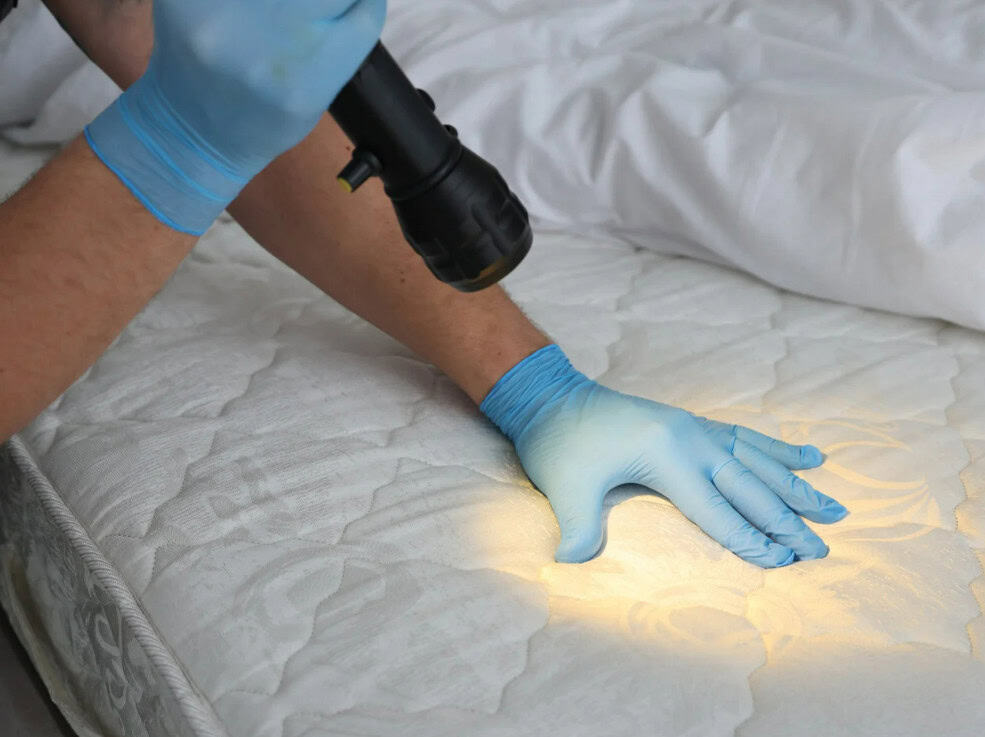
These deposits are most commonly found along mattress seams, on the edges of bed frames, behind headboards, in the folds of curtains near the bed, and along the edges of skirting boards. A torch and a systematic approach to checking these areas will often reveal activity that would otherwise go unnoticed.
Early Sign #4: Shed Skins and Egg Casings
As bed bugs grow, they shed their outer skin — a process called moulting — multiple times before reaching adulthood. These shed skins, or exuviae, are translucent and pale yellow, roughly the same shape as a live bed bug but hollow. Finding them is a strong indicator of an active infestation, as they accumulate wherever bugs are nesting.
Alongside shed skins, look for eggs and egg casings. Bed bug eggs are tiny — approximately 1mm long — white, and pearlescent. They are sticky when freshly laid and are often deposited in clusters in crevices and along seams. While they require magnification to see clearly, a concentrated search of mattress seams, furniture joints, and wall-floor junctions will often turn up evidence if an infestation is present.
Early Sign #5: A Musty, Sweet Odour
This sign is less commonly known but worth understanding. Bed bugs produce pheromones, and in larger infestations, these chemicals accumulate to produce a distinct smell often described as sweet, musty, or faintly reminiscent of almonds or overripe fruit. Some compare it to the smell of a damp towel that has not dried properly.
If a bedroom has developed an unusual odour that you cannot attribute to an obvious source, and particularly if other signs are also present, the smell may be worth taking seriously. A strong, pervasive version of this odour typically indicates a well-established infestation.
Where to Look: The Key Inspection Areas
Effective early detection requires knowing where bed bugs prefer to hide. Despite the name, they are not limited to beds — though that is the most common location given its proximity to their food source. Key inspection areas include:
- Mattress seams and tags — run your finger along every seam and check the label area carefully
- Box springs and bed frames — particularly joints, corners, and any wood-to-wood connections
- Headboards — especially wooden headboards fixed to or resting against the wall
- Bedside furniture — drawers, joints, and the underside of nightstands
- Skirting boards and wall junctions — particularly behind the bed
- Electrical outlets and switch plates — bed bugs will use these as harbour points in heavily infested rooms
- Curtains and upholstered furniture — along seams and underneath cushions
Use a torch and, if available, a flat-edged card to probe seams and joints. What you are looking for is any combination of live bugs, shed skins, eggs, dark spots, or faecal staining.
What to Do If You Find Evidence
If your inspection turns up any of the signs above, act quickly. Early-stage infestations are significantly easier and cheaper to address than established ones. Wash and heat-dry all bedding, clothing, and soft furnishings immediately — bed bugs cannot survive sustained temperatures above 60°C. Vacuum thoroughly, paying close attention to seams and joints, and seal the vacuum bag in a plastic bag before disposing of it outside.
For anything beyond the earliest signs, professional pest control is strongly recommended. DIY treatments can disturb an infestation and cause bugs to spread further into the property, making the problem harder to resolve. A qualified pest controller will assess the extent of the infestation and recommend the appropriate treatment — whether heat treatment, targeted insecticide application, or a combination of both.
The most important thing is not to ignore the early warning signs. With bed bugs, the cost of delay is almost always measured in sleepless nights — and a significantly larger exterminator’s bill.