

If you have a fluffy, double-coated dog living in your home, you’re likely very familiar with the joys of burying your hand in that thick fur. However, you might not be aware that there could be a flea infestation lurking somewhere in that coat.
Fleas are known to be excellent at hiding from view. Thick coats provide them with the perfect hiding place.
In this article, we’ll tell you everything you need to know about flea infestations in long-haired, double-coated dogs—and what to do about it before your dog’s fleas make their way into your home.
Why Thick Coats Make Flea Detection So Difficult
A flea is roughly 1-2mm in length, has a dark brown color, and is flat – all of which makes it perfect for moving through the fur of its host. Flea dirt and irritation can easily be spotted on short-haired dogs but may not be spotted at all on dogs with thick coats.
This is due to the fact that:
- Density: The double coat has two layers; the soft undercoat and the longer outer coat. Fleas live in the undercoat close to the dog’s skin where the light cannot reach the coat nor can the fingers go to clean it.
- Heat: The undercoat traps heat close to the dog’s skin, creating the perfect temperature for the fleas to reproduce rapidly.
- Reduced scratching visibility: The full coat of dogs covers the areas where fleas infest but also allows the dog to scratch without the owner seeing the telltale signs of fleas infestation as on short-haired dog breeds.
By the time an owner notices something is wrong, a small flea problem can have escalated significantly.
Breeds Most at Risk
All breeds of dog with long, dense or double-coats are at risk of fleas. Not due to a preference of the fleas for these breeds, but because the coat makes it harder to detect fleas on the dog, and for the fleas to have a shelter in which to live.
Some of the most common dog breeds to succumb to infestations of fleas include:
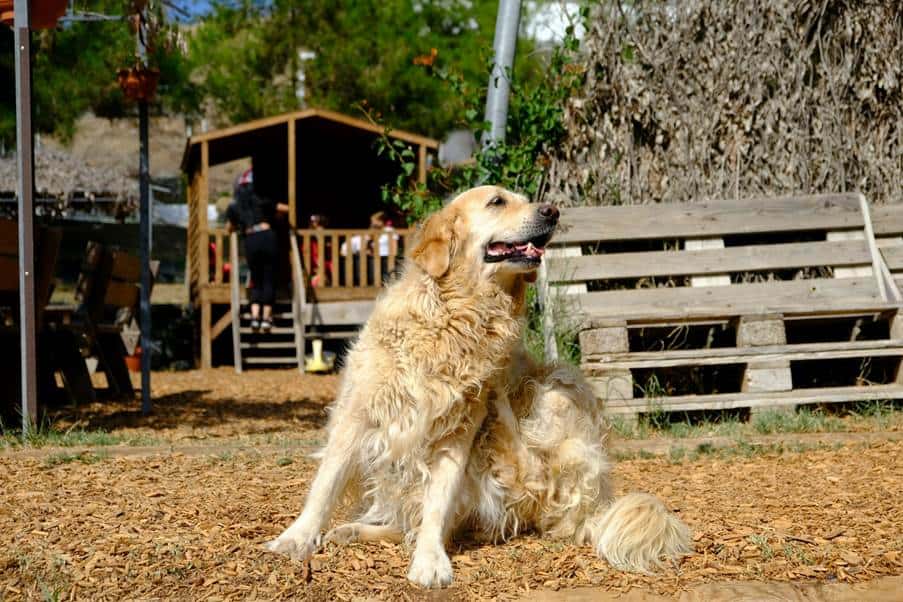
- Golden Retrievers — perhaps the most well-known double-coated family dog, with a dense undercoat and water-repellent outer layer. Golden Retrievers are highly active outdoor dogs that need around an hour of exercise per day, which increases their exposure to flea-prone environments like parks, long grass, and wooded areas.
- Border Collies
- Bernese Mountain Dogs
- Rough Collies
- Chow Chows
- Siberian Huskies
- Pomeranians
- Australian Shepherds
If your dog falls into any of these categories – or if he has a longer, thicker coat – flea prevention is a necessity.
Signs of a Flea Infestation in a Thick-Coated Dog
Due to the difficulty of spotting fleas on a thick-coated dog, there are some other signs of an flea infestation to look out for:
1. Flea Dirt
Flea dirt is flea faeces – tiny black or dark reddish-brown specks that look like ground pepper. This is often found at the base of the dog’s fur. The best way to check for flea dirt is to use a fine-toothed comb through the dog’s fur over a sheet of white paper or a damp white cloth. If there are small dark specks that turn a reddish-brown colour when wet, these are flea dirt – the dark colour is due to the digested blood of the fleas.
2. Excessive Scratching, Biting, or Licking
All dogs will scratch at least occasionally. However, if a dog is scratching in areas like the base of the tail, groin, neck or under the armpits, this could be a sign of fleas infesting the dog.
3. Hot Spots or Hair Loss
Repeated scratching and biting can cause localised skin irritation, hot spots, and even patchy hair loss. In thick-coated dogs, you may only notice this during grooming when you part the fur.
4. Restlessness and Behavioural Changes
A dog that’s itchy and uncomfortable will often seem agitated, sleep poorly, or be less willing to settle. If your dog’s behaviour has changed without an obvious cause, parasites are worth investigating.
5. Flea Allergy Dermatitis (FAD)
Some dogs are allergic to flea saliva. Even a single flea bite can trigger an intense allergic reaction — intense itching, redness, and skin inflammation. FAD is actually more common in dogs that are less heavily infested, because heavily exposed dogs build some tolerance. If your dog reacts badly to even minor bites, speak to your vet.
6. You See Them on Yourself
Fleas don’t only stay on your pet. If you’re noticing small bites around your ankles, or if you spot tiny jumping insects on your socks or furniture, your home is already involved.
How to Check a Thick-Coated Dog for Fleas
A proper flea check requires more than a casual ruffle of the fur. Follow these steps:
What you’ll need:
- A fine-toothed flea comb
- A bowl of warm soapy water (to drown any fleas you find)
- A white cloth or paper towel
- Good lighting
Step-by-step:
- Work in a well-lit room, ideally outdoors on a hard surface so any fleas that escape don’t immediately re-infest your carpet.
- Starting at the head, part the fur in sections with your fingers to expose the skin beneath.
- Run the flea comb slowly and firmly through each section, working toward the tail.
- After each stroke, wipe the comb on the white cloth and inspect for dark specks or live fleas.
- Pay particular attention to: the base of the tail, behind the ears, the groin, armpits, and belly.
- Drop any live fleas immediately into the soapy water — they’ll drown within seconds.
For heavily coated dogs, this process is most effective after bathing, when the coat is clean and the undercoat is more separated and accessible.
From Dog to Home: How Flea Infestations Spread
Here’s something many dog owners don’t realise: the fleas on your dog are only about 5% of the total number of fleas infesting your dog and your home. The remaining 95% of the total fleas are inside your home.
A female flea can lay up to 50 eggs per day. These eggs fall off your dog and onto your home’s carpets, furniture, bedding and crevices in the home. After a few days the eggs will hatch into larvae. After a few weeks the larvae will become adult fleas that can find and infest your pet.
Therefore, treating only your pet for fleas will not give you successful flea control. You must treat your pet and your home for fleas simultaneously.
Treatment: What Actually Works
Treating Your Dog
There are several effective flea treatment options for dogs:
- Spot-on treatments: Applied monthly to the back of the neck. Brands like Advantage, Frontline, and Bravecto are widely used. Some are prescription-only — ask your vet for the most appropriate choice.
- Oral flea treatments: Monthly or quarterly tablets that kill fleas when they bite. Highly effective and not affected by bathing or swimming (ideal for active, outdoorsy breeds).
- Flea collars: Modern collars like Seresto offer up to 8 months of protection and have improved significantly from older designs.
- Flea shampoos: Useful for killing live fleas immediately but offer no long-term residual protection. Best used alongside a longer-acting treatment.
Important: Always use treatments appropriate for your dog’s weight and age. Never use dog flea treatments on cats — some ingredients, particularly permethrin, are highly toxic to cats.
Treating Your Home
This is where most people fall short. To break the flea life cycle:
- Vacuum thoroughly — every floor, every cushion, every skirting board. Vacuuming stimulates pupae to hatch, making them more vulnerable to treatment. Dispose of the vacuum bag immediately outdoors.
- Wash all bedding — your dog’s bed, your bedding, cushion covers — at 60°C or above.
- Use a household flea spray — products containing IGR (Insect Growth Regulator) are the most effective because they disrupt the flea life cycle at multiple stages, not just killing adults.
- Treat all pets in the household — even cats that never go outside can carry fleas.
- Repeat — a single treatment is rarely enough. The pupal stage of the flea life cycle is resistant to most insecticides. Vacuuming and treating regularly over 2–3 months is often necessary to fully clear an infestation.
Prevention: The Best Long-Term Strategy
Once you’ve dealt with an infestation, prevention is far less effort than treatment. For thick-coated, active breeds in particular, a consistent prevention routine is essential.
- Year-round parasite prevention: Fleas are most active in warm months, but indoor central heating means they can survive year-round. Year-round preventative treatment is now recommended by most vets.
- Regular grooming: Frequent brushing of your dog’s undercoat not only prevents matting but gives you regular opportunities to spot flea dirt early. For heavily coated breeds, professional grooming every 6–8 weeks is advisable.
- Garden maintenance: Fleas thrive in shaded, damp areas with leaf litter and long grass. Keep your garden tidy, mow regularly, and consider treating lawn areas if your dog spends a lot of time outside.
- Check after high-risk outings: Dog parks, woodland walks, and areas with wildlife (foxes and hedgehogs are common flea carriers) are higher-risk environments. A quick comb-through after these outings can catch problems early.
When to See a Vet
See your vet promptly if:
- Your dog is scratching intensely and shows signs of skin infection (redness, weeping, crusting)
- You suspect flea allergy dermatitis
- Your dog is losing weight, lethargic, or showing signs of anaemia (pale gums) — heavy flea infestations in small or young dogs can cause significant blood loss
- Over-the-counter treatments have failed to resolve the problem after consistent use
Your vet can prescribe stronger treatments and recommend a comprehensive treatment plan for both your dog and your home.
The Bottom Line
A thick, beautiful coat is one of a dog’s most distinctive features — but it’s also a flea’s best hiding place. Owners of double-coated and long-haired breeds need to be more diligent, not less, when it comes to parasite prevention and detection.
The key takeaways:
- Check regularly using a flea comb, not just a visual look
- Know the signs beyond scratching: flea dirt, skin changes, and behavioural shifts
- Treat your home as well as your dog — always
- Prevention is far easier than dealing with a full infestation
If you’re considering adding a thick-coated breed to your family, make sure you’re fully prepared for their grooming and parasite prevention needs before bringing them home. Understanding the breed’s coat, exercise requirements, and health considerations from the start will make you a much more prepared owner.