Almost every guide to keeping rodents and wildlife out of a house starts at ground level. Seal the gaps around pipes. Fit door sweeps. Keep the bins covered. Move the woodpile away from the wall.
All correct, all worth doing, and all aimed at the wrong floor. Squirrels, roof rats, bats, birds and wasps are not coming in under the door. They’re coming in eight to twenty feet up, through a handful of details that most homeowners have never looked at closely and that a roofer thinks about every working day.
Why Up Beats Down
The logic is straightforward once you think like the animal. Ground-level entry means crossing open space where predators are, then defeating a wall that is usually solid concrete or brick at the base.
The roofline offers the opposite proposition. It’s reached by climbing, which most of these species do better than they walk. It’s built from many small components joined together, which means many small seams. And it’s the part of the house nobody inspects, because doing so requires a ladder.
Add that the attic behind it is dark, dry, insulated, undisturbed for months at a time, and warmer than outside in winter, and you have described near-perfect denning habitat.
The Six Places That Actually Fail
Roof entry is not random. It happens at the same details on house after house.
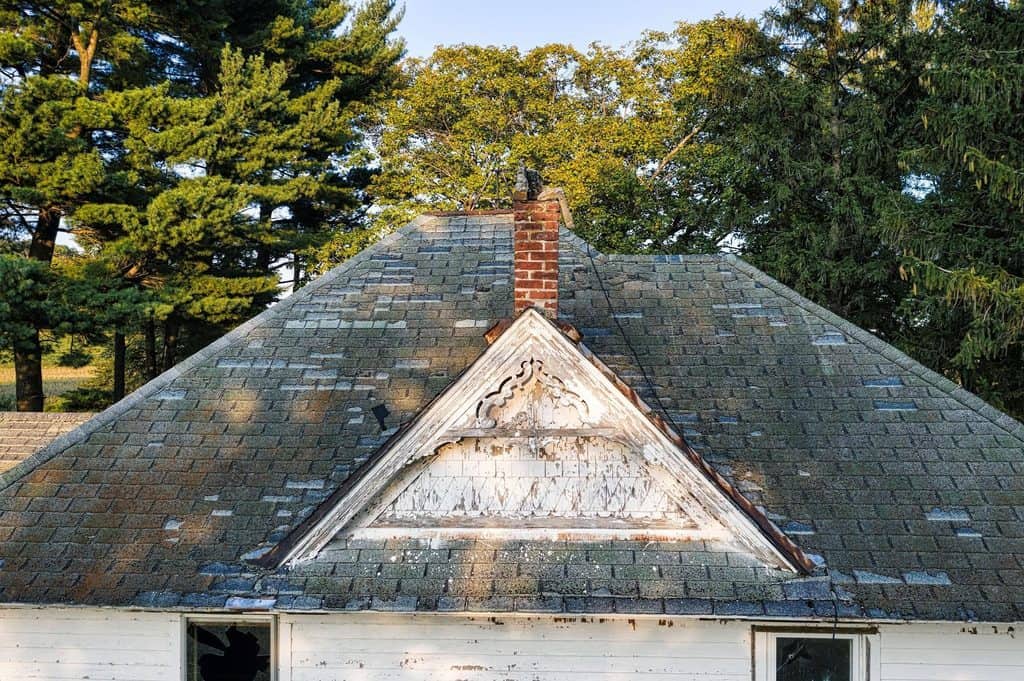
Soffit and fascia joints, where the horizontal underside of the eave meets the vertical board, are the classic squirrel entry. Gable vents, which are supposed to be screened and frequently aren’t, or are screened with plastic mesh that a rodent chews in an evening. Ridge vents, where the plastic baffle has lifted at one end. Roof-wall intersections, where a lower roof plane meets a wall and the flashing has separated. Plumbing vent boots, whose rubber collars perish in UV and split. And the drip edge at the eave, where a gap of half an inch between the decking and the fascia gives a rat a hand hold and then a doorway.
Every one of those is a roofing detail. None of them is a pest control problem until an animal finds it.
Damage and Entry Are the Same Conversation
There’s a chicken-and-egg quality to this that matters practically. Storm damage creates entry points, and animals then enlarge them; equally, animals create entry points that then admit water.
Round Rock Roofing Company works a Central Texas service area where the older neighbourhoods carry heavy live oak and pecan canopy while the newer developments barely have shade yet, and the difference in wildlife pressure between the two is stark. Limbs over a roofline are a bridge. A hail-damaged vent boot in year one is a rat entry by year three.
Which is why the two trades keep finding each other’s work. A pest technician sealing an entry hole is often looking at a roofing defect. A roofer replacing a section of decking is often looking at twenty years of rodent traffic.
What Each Species Tells You
The animal identifies the opening, if you know the sizes.
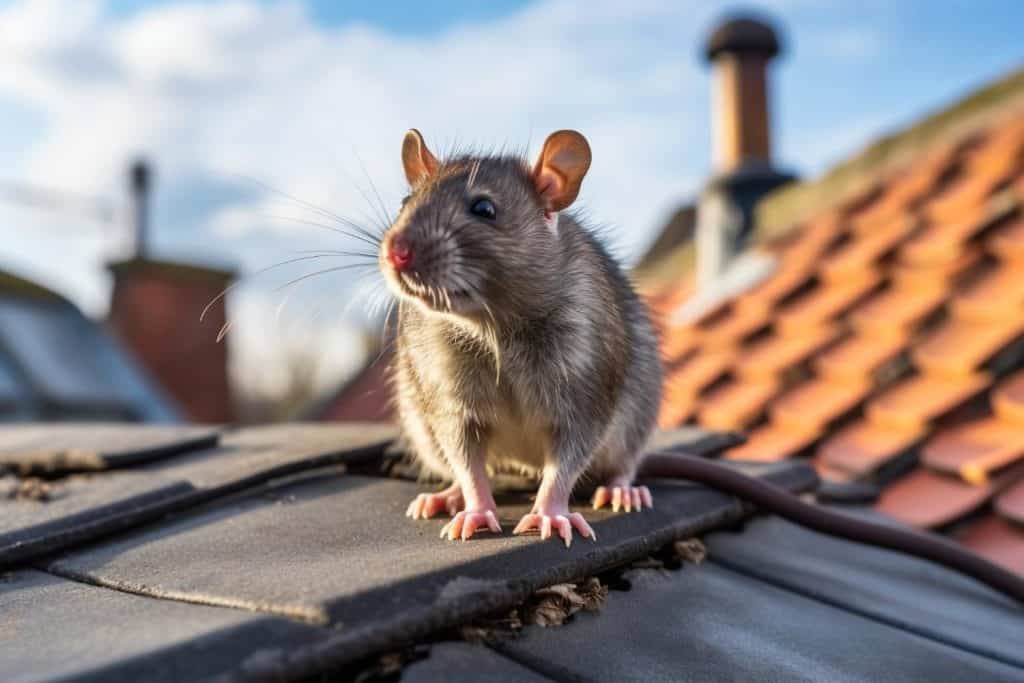
Bats need almost nothing, a gap around three-eighths of an inch, and they favour ridge lines and the gap under lifted flashing. Roof rats want about half an inch and will use the drip edge or a gap where a cable enters. Squirrels need roughly an inch and a half and usually chew to get it, most often at a soffit corner or a gable vent. Raccoons need a genuine hole and will make one, typically by peeling back a soffit panel or tearing at a decayed fascia board.
Scratching at dawn and dusk with a scampering quality points to squirrels. Night activity with a scurrying, lighter sound points to rats. Heavy, deliberate movement points to raccoons.
The Exclusion Rules Worth Knowing
Sealing a roof against wildlife is mostly a question of gap size and material, and there’s good published guidance on both.
Texas A&M AgriLife Extension’s advice on managing rats and mice and its wider pest prevention work sets the practical threshold at a quarter of an inch: seal gaps of that size or larger, using steel wool or an expanding foam sealant for small openings and excluder cloth or concrete for larger ones, and pay specific attention to the gaps around eaves and to the frames of screens and louvers. Its design guidance also makes the landscaping point plainly, noting that vines up a wall become highways for roof rats, mice and squirrels, and that trees planted too close to a building will eventually have limbs touching the roof and become pest conduits.
Two things follow that people consistently get wrong. Expanding foam on its own is not exclusion, because rodents chew straight through it, so it belongs behind steel wool or mesh rather than instead of it. And a quarter inch is much smaller than the gap most people would consider a gap.
Do the Sealing Before the Trapping, Not After
The sequencing error is universal. Someone hears scratching, sets traps, catches an animal, and considers the matter closed until it recurs the following autumn.
Exclusion has to come first or simultaneously, or you are simply thinning a population that has a permanent front door. The one exception is timing: sealing an entry while young animals are still inside is both inhumane and expensive, because a trapped raccoon will destroy considerably more than it would have while leaving voluntarily. Confirm the attic is empty before you close it.
Trim the Trees, Then Fix the Roof
If you do two things this year, make them these.
Cut back any limb within about eight feet of the roofline, which removes the bridge rather than the animal. Then get someone on a ladder to look at the six failure points above, ideally after storm season rather than before it.
Neither is pest control in the conventional sense. Both do more to keep an attic empty than any product you can buy.
The Attic Tells You First
Go up with a torch twice a year and look for droppings along the joists, insulation compressed into runways, chewed cable sheathing, and daylight anywhere at the eaves.
Daylight is the finding that matters most, because it is simultaneously your pest problem and your future water problem. Anywhere light gets in, something else already has.