
When dealing with nuisance animals and outdoor pests, homeowners often face an important decision: should they choose humane pest control methods or traditional pest control techniques? The right approach depends on the type of pest, the extent of the infestation, local regulations, and your long-term goals. On larger rural properties, some landowners may also use a highly precise PCP air gun where it is legal and appropriate as part of an integrated pest management strategy for certain pest species, alongside prevention and habitat modification.
What Is Humane Pest Control?
At its core, humane pest control is about conflict resolution rather than elimination. Instead of treating pests as invaders to be destroyed, this philosophy focuses on changing the environment so the animals voluntarily move elsewhere.
Humane pest control is built on three pillars:
- Prevention and Exclusion: Sealing entry points so pests can’t get in.
- Relocation and Deterrents: Humanely capturing and moving animals, or using sensory tools to make your property unappealing.
- Ethical and Eco-Friendly Solutions: Minimizing stress or harm to target wildlife and preventing chemical runoff into the environment.
Common Humane Pest Control Methods
If you want to keep things humane, your toolkit will rely heavily on physical barriers and behavioral deterrents:
- Live Traps: Capturing animals (like squirrels or raccoons) in cage-style traps to release them elsewhere (where legally permitted).
- Motion-Activated Sprinklers: Startling deer, rabbits, or neighborhood cats away from prize gardens with a sudden burst of water.
- Wildlife-Proof Fencing: Buried wire mesh (like hardware cloth) to keep burrowers like groundhogs out.
- Bird Netting: Protecting fruit trees and berries physically rather than chemically.
- Natural Repellents: Using scent-based barriers like peppermint oil, garlic, or predator urine.
- Habitat Modification: Removing brush piles, securing trash cans, and keeping grass trimmed so pests have nowhere to hide.
What Is Traditional Pest Control?
Traditional pest control focuses on fast, decisive population reduction. It assumes that once a pest has crossed a certain threshold, the most practical solution is lethal or chemical intervention.
Common traditional tools include:
- Snap Traps: Quick-kill mechanical traps, most commonly used for mice and rats.
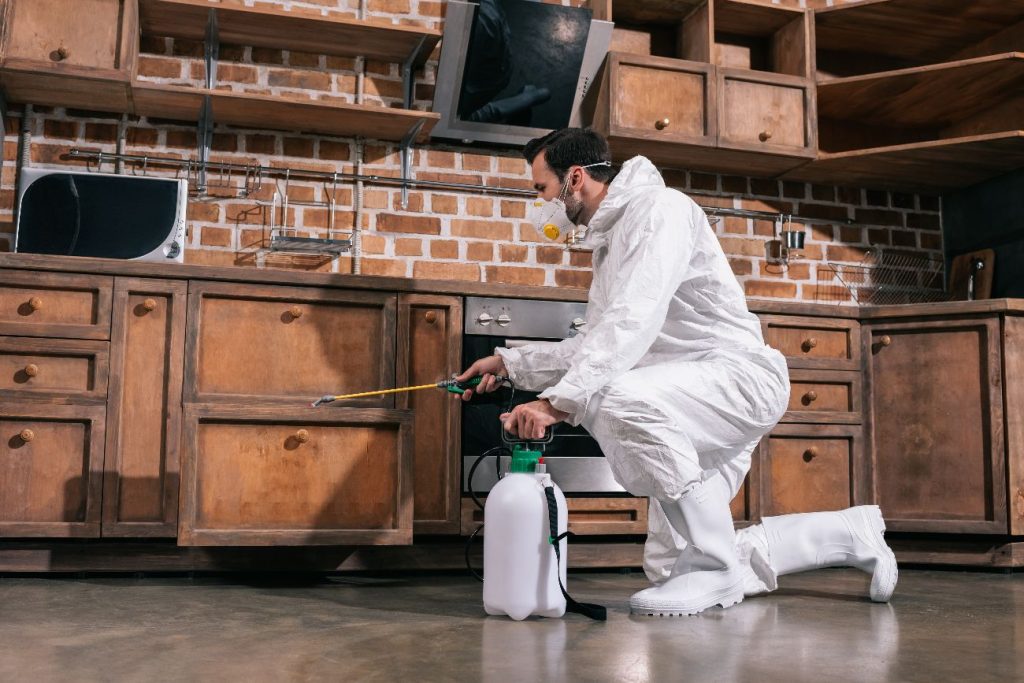
- Chemical Pesticides: Sprays or powders designed to kill insects on contact or through ingestion.
- Rodenticides: Chemical baits that kill rodents after consumption (though they carry a high risk of secondary poisoning for predators like hawks and owls).
- Mechanical Traps: Lethal body-grip traps often used for larger burrowing pests like moles.
When Traditional Control Is Commonly Used
While many prefer to avoid lethal methods, traditional pest control is frequently turned to in specific scenarios:
- Severe Infestations: When a colony of rats has established itself inside a home’s walls, posing immediate health risks.
- Agricultural Settings: Protecting large-scale crops where minor pest damage can translate to devastating financial losses.
- Large Rural Properties: Managing highly invasive or destructive species across acreage where exclusion fencing is physically or financially impossible.
- Commercial Pest Management: Meeting strict health code requirements in restaurants and food production facilities.
Comparing Humane and Traditional Pest Control
To figure out which direction makes sense for your property, it helps to look at them side-by-side across a few key categories:
| Feature | Humane Pest Control | Traditional Pest Control |
| Primary Goal | Change animal behavior & block access | Rapidly reduce the pest population |
| Short-Term Speed | Moderate (takes time to set up barriers) | Fast (immediate knockdown of pests) |
| Long-Term Success | High (addresses the root cause) | Low (pests return if resources remain) |
| Risk to Pets & Kids | Exceptionally low | Moderate to High (due to toxins/snaps) |
| Upfront Cost | Moderate to High (fencing, repairs) | Low (traps, chemical sprays) |
| Environmental Impact | Minimal to none | High potential for non-target wildlife harm |
Effectiveness
If you have a mouse in the kitchen tonight, a traditional snap trap works incredibly fast. However, if you don’t seal the hole under the sink, another mouse will take its place next week. Traditional methods offer fast short-term relief, while humane methods (specifically exclusion) provide permanent long-term solutions.
Cost
Traditional methods usually win on initial cost—a pack of snap traps or a can of spray is cheap. Humane methods, like installing under-deck fencing or replacing rotted siding, require a higher upfront investment. However, because humane methods prevent future infestations, they often end up being much cheaper over a five-year period.
Safety
Traditional poisons and heavy-duty traps carry risks. Curiosity can lead curious dogs, outdoor cats, or toddlers into contact with dangerous baits or snap mechanisms. Additionally, poisoned rodents often stumble outdoors, where they are eaten by hawks, owls, or foxes, unintentionally poisoning local wildlife. Humane methods carry virtually zero risk of secondary poisoning.
Which Method Works Best for Different Pests?
Different invaders require different strategies. Here is a quick guide to managing common pests effectively.
Rodents (Mice and Rats)
- The Humane Route: Seal every gap larger than a dime with steel wool and silicone caulk (exclusion). Keep food in airtight glass or metal containers.
- The Traditional Route: Use classic wooden snap traps. Avoid rodenticide baits inside the home to prevent mice from dying and rotting inside your walls.
Rabbits and Groundhogs
- The Humane Route: Install a wire mesh fence around your garden, burying the bottom 6 to 12 inches in the ground to prevent burrowing underneath. Remove brush piles.
- The Traditional Route: Lethal body-grip traps or, in rural areas, targeted population control.
Birds
- The Humane Route: Use physical bird netting over fruit bushes, install bird spikes on flat ledges to prevent nesting, or hang reflective tape to scare them away visually.
- The Traditional Route: Lethal options are rarely legal or practical for birds, as many species are protected under federal law (such as the Migratory Bird Treaty Act).
Squirrels
- The Humane Route: Trim tree branches so they are at least 8 to 10 feet away from your roofline. Install metal collar guards on tree trunks to prevent climbing.
- The Traditional Route: Live trapping followed by euthanasia or relocation (depending entirely on local wildlife laws).
Why Integrated Pest Management (IPM) Is the Real Winner
If you ask professional exterminators what actually works, they won’t tell you to choose just one side. Instead, they will recommend Integrated Pest Management (IPM).
Integrated Pest Management is an ecosystem-based strategy that focuses on long-term prevention. It combines biological, cultural, physical, and chemical tools in a way that minimizes economic, health, and environmental risks.
Benefits of an IPM Approach
By using IPM, you get the best of both worlds. You save money by not spraying chemicals needlessly, you keep your family and pets safe, and you solve the root cause of the pest issue so you aren’t stuck repeating the same cycle every spring.
Legal and Ethical Considerations
Before you take matters into your own hands, keep two critical rules in mind:
1. Know Your Local Wildlife Laws
In many regions, it is actually illegal to relocate live wildlife to public parks or other properties. Relocating an animal often sentences it to starvation (as it doesn’t know where to find food in the new territory) or causes territorial fights with existing wildlife. Always check with your local Department of Natural Resources or wildlife extension office before trapping.
2. Follow Legal Discharge Ordinances
For those on large rural properties using air rifles for pest control (such as managing invasive starlings or destructive rodents), you must ensure you are fully compliant with local firearm and airgun discharge ordinances. Never target protected migratory birds or game animals out of season.
Choosing the Strategy for Your Property
- Small Urban Yards: Focus almost entirely on exclusion and prevention. Keep trash secured, seal foundation cracks, and use natural repellents. Space is tight, and pets are nearby, making traditional poisons highly risky.
- Suburban Homes: A hybrid approach works best. Use physical barriers (like garden fencing) and sensory deterrents first. If a rodent infestation takes hold indoors, use quick-kill snap traps safely hidden inside lockable bait stations, and immediately seal the entry points.
- Rural and Farm Properties: These larger landscapes demand Integrated Pest Management. Combine habitat modification (keeping fields mowed near the home) with sturdy physical barriers around gardens, and use targeted, responsible population management where necessary to protect livestock or crops.