

Every time your dog leaps through the back door after rolling in the grass or your cat sneaks in from a few hours on the porch, they’re likely carrying more than dirt and pollen. Pets establish an indoor-outdoor link that rarely gets cleaned when they return home, and when they do, they bring the consequences of often-overlooked infestations — whether that pet is a laid-back Labrador or a busy Patterdale Terrier.
Since pets regularly go in and out on a daily basis, they’re naturally the perfect vessels to transport unwanted pests. Their hair sticks to the fibers of tiny parasites, their feet carry in microscopic eggs and larvae that aren’t easily noticed, and their bowls and bedding create ideal breeding grounds that allow pest populations to boom. While you focus on making sure your pet has a happy and healthy life, the microscopic unwanted stowaways have already made themselves at home in carpets, cushions, and dark recesses of your home.
Compared to non-animal households, pet households experience pest infestations at a considerably higher frequency. Yet, this risk factor seldom makes it onto pet care considerations or discussions during the adoption process.
By acknowledging how your beloved friend inadvertently brings pests into your home, you’re taking the first step necessary to protect both your home and your animal from the health considerations and discomforts of vermin infestations.
Fleas and Ticks: Stowaways on Fur
Fleas and ticks are professional hitchhikers who’ve been genetically refined over millions of years to become parasites of warm-blooded mammals. Fleas jump and ticks crawl as pets brush against tall grass, shrubs, and even pavement – anything and everything where wildlife has traveled. They get into fur and are rarely detected until it is too late. They’re embedded in the skin with bites and blood-sucking all day long – or until their next meal, anyway.
Fleas, however, don’t stay on pets; adult fleas procreate and their eggs fall off into carpets, upholstery, and bedding. Flea eggs are white and small and hatch into larvae that emerge from eggs that feed on adult flea poop; this is the only stage that can be seen without a magnifying glass – before they breed a new generation of adults.
This can happen as soon as four to ten days after being inside. Simultaneously, ticks will drop off after a few days or weeks to molt or lay eggs of their own in baseboards and cracks/fissures in furniture.
The most interesting fact surrounding fleas is that they’re often the result of an indoor infestation, meaning that pets who’ve never been outside in their lives somehow still get fleas. Fleas jump hitch on clothes and other animals or somehow make it through doors and windows to develop populations indoors.
Once a population is established indoors, it is self-sustaining – and apartment cats sometimes get fleas because they live in high-rises with no outdoor access but still have infestations.

Rodents and Insects Attracted by Pet Food
Pet food bowls act as 24/7 feeding dens for interior intruders, creating scents that waft through a home and down the block. The essential oils, proteins, and carbohydrates of dry kibble and wet foods are exotic delicacies for hungry creatures. They travel remarkably far; up to 50 feet of food detection is estimated in the ant and roach world!
The scent creates a trail of pheromones that scouts leave behind so members of the colony can find the forage that they’ve worked so hard to gather. Thus, it makes sense that in a matter of hours for one or two scouts seeing the bowl belonging to a pet, potentially hundreds of little buggers could swarm it. Furthermore, roaches are nocturnal.
Their patterns emerge solely at night. They’re not seeking only what your pet leaves behind, but also crumbs, spills and even water from the bowl itself.
Finally, mice and rats catch on quickly that with little work effort a pet bowl provides easy calories. They don’t need to scavenge through walls and up corners to find a food source; it’s sitting there, waiting for them. In addition, if there are unsecured bags or containers or overnight bowls, there’s a smorgasbord at all hours.
Finally, the smell of the pet food goes further than you’d expect. Rodents are adept at smelling scents; they can detect food through walls, doors and floors. Therefore, keeping the pet food in an airtight storage bag with zip seal does not help deter pests because the low volatile chemicals disperse enough into the atmosphere that they know what’s going on.
In addition, it’s the scent of the pet food that travels throughout the home through air, vents and holes in the construction. There’s an invisible roadway as to what’s what; scent takes them there.
Dirty Bedding and Rest Areas
The soft places in your home where your animal likes to curl up aren’t just filled with fur and dander – flea eggs are constantly falling off of pets and ending up in soft materials, incubating until it’s time to hatch. Flea eggs are so resilient that they survive being sucked up by vacuums and many cycles in washing machines if the water isn’t hot enough.
Where pet hair and skin, added moisture from breathing and sporadic accidents, and a warm environment coexist, an intersection of the most pest-friendly conditions exists. Where there is carpet beetles feeding on animal fibers and skin, dust mites feeding on excess humidity of bedding, flea larvae living off organic material starting their lives deeply embedded in fabric fibers receive protection from light, air circulation, and timely observation for removal.
While humans can regularly wash these items, providing some necessary hygiene, it doesn’t always eliminate existing populations. Flea pupae hide in silk cocoons that humans can’t always remove and have the ability to withstand soap and hot water – and weeks or months down the line, when those pupae feel vibrations or carbon dioxide as the only means of survival, they emerge.
This indicates how flea infestations can sometimes get worse weeks after treating your pet for them; new adults emerged from pupae that professionals were unable to kill due to the development cycle. For this reason, many professionals suggest treating both the animal and soft furnishings at the same time.
Outdoor Access Points Pets Create
Pet doors and pet flaps give your animals free access but also, they are wafting an invitation to pests. It defeats the purpose of your door and the protective barrier of your home – it’s an always open, partially ajar entryway that invites rodents, snakes, raccoons, and thousands of nuisance species.
It’s far easier and less time consuming for pests to enter this way than it is to attempt to sneak through a shut door that only allows them a few seconds of opportunity while a human or pet is rushing in and out.
Even without these portals, the sheer volume of a door being opened and closed – and opened and closed – for a pet, offers entry. Thus, when a door is consistently left open for a fly or a gnat or a moth to enter, it’s troublesome.
In addition, with rodents come other means of entry adjacent to commonly used entries so that when no one is present and doors are open, they can slip right in. Worn weather stripping and threshold seals occur because people use entryways often. This ultimately provides access 24 hours a day even if doors are closed.
Your garden and yard act as a thoroughfare for pests making their way into the comfort of your home. The area where your pet plays and frolics the most is also the most populated area for insects, spiders and small creatures where their nests, colonies and populations reside. Thus, rolling around in grass or creeping through bushes brings their friends home with them.
Even without overt transmission, pets bring in microscopic eggs, larvae and spores from their paw pads through soil and foliage, transferring whatever was outside that is never supposed to be in any home, directly inside. Thus, when the environment is right, infestations can emerge from what spores are left behind on your welcome mat.
Warning Signs Pests Are Already Inside
Sometimes your pet communicates pest problems before the pests are even visible to you.
- An inordinate amount of scratching – especially when it seems directed at one particular point of the body – suggests fleas. Fleas, for example, get dogs and cats obsessed with chewing their back ends or biting their tails as they attempt to catch small little moving pests wreaking havoc on their skin and making them itch like crazy.
- Skin irritations come in the form of patches of red, scabs, or spots with missing hair. Some pets experience flea allergy dermatitis where the response is amplified when even one flea bites them by accident. Look around behind ears, along the neck and down to the tailbone for small black spots that resemble pepper. These are flea droppings from digested blood (as fleas drink blood); if they’re soaked in water, they turn red.
- Furthermore, pest problems reveal themselves in your pet’s environment. Mouse droppings are small black pellets or grains of rice found where pets feed or other places in the house. Rat droppings are larger and brown; a nest might sound as if something is scratching behind the walls; a musty smell may emerge from their secret lair. Ants will march en masse from an area to a food bowl or flies and other small insects will congregate near your pet without rhyme or reason and by investigating these before they become a full-fledged infestation, you may avoid needing an exterminator’s services.

Prevention Strategies That Work
The first line of defense is preventative measures and maintenance.
- Bathe dogs with veterinary recommended flea prevention shampoos to stay on top of things.
- Brush pets outside if possible to reduce loose debris from coming inside.
- Check for fleas/ticks in the fur coming back inside, especially in the summer when fleas and ticks are out more commonly.
- For food, make sure all is sealed in airtight containers made of thick enough plastics or metal so rodents cannot chew through. Do not leave food bowls out for overnight eating. If they’re not eating, they shouldn’t have access to things they shouldn’t.
- Wipe down everyday food use areas to remove excess food, spills, crumbs – think ants. Place feeders away from walls where pests can crawl up the wall side to access the food.
- Wash bedding weekly in hot water (greater than 60 degrees Celsius) to kill flea eggs and larvae.
- Vacuum where animals spend a lot of time. If a vacuum bag needs changing, immediately put it into an outside trash can so that hats hatching eggs don’t emerge from the vacuum later on. If there’s no vacuum bag, empty it outside.
- Dust beds with pet safe diatomaceous earth that’s a mechanical killer for fleas without toxic pesticides.
- Create a barrier for your yard by keeping grass low, eliminating leaf litter where ticks may hide, and cutting back plants and shrubs from the foundation edge.
- Caulk holes around pipes, vents and any utility entering point through your foundation.
- Buy door sweeps for every exterior door and ensure window screens are well fitted.
- Use treatments around your perimeter (and of course, pet safe options) during peak pest seasons.
When Home Fixes Stop Working
Despite prevention efforts, some infestations reach critical mass beyond what home remedies can handle. For example, pests breed exponentially – and when they breed in different nests across a home, DIY pest control efforts won’t eradicate the populations anymore.
Fleas are the perfect example of why infestations occur so quickly. Ninety-five percent of a flea population exists in eggs, larvae, and pupae where you live, not on your pets and not on your carpets. Only an adult flea count is treated when we spray our pets and homes; however, with so many hundreds of eggs waiting to hatch and grow, the problem is bound to keep compounding.
In addition, mice don’t infest homes alone. Where there’s one mouse, there’s typically a family, and with how quickly rodents breed, waiting to exterminate means a much larger problem within days.
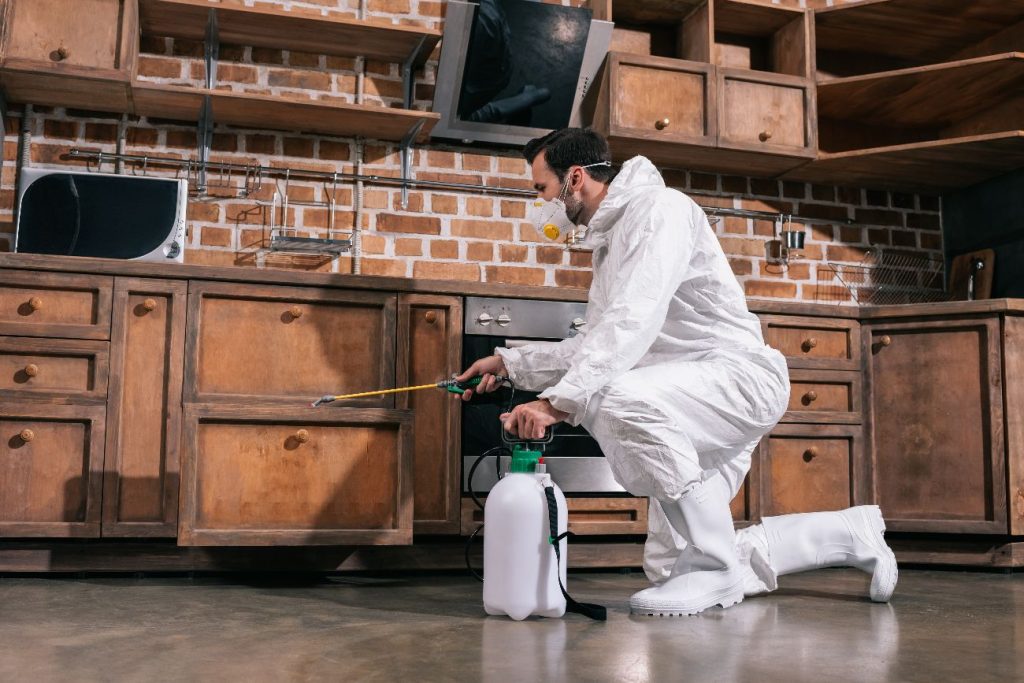
When populations become too large to handle or multiple pests appear in multiple locations at once, pest control professionals become necessary. This is because professionals can assess the bigger picture – where they reside, how they enter, and why the conditions are there to support their existence – which residents do not always identify. They use products that are professional strength and can either kill all levels of a pest’s life cycle or ensure safety for pets and family.
When pets live in the home as well as pests, professional treatment requires specific accommodations. Technicians know which products are meant for outdoors or indoors with special accommodations that can remain safe from children and household pets. They know which chemicals pets can be around versus those that are allowed in non-pet-friendly areas and what the re-entry time frame is to protect your animals from exposure during application windows.
Final Takeaway
While pet ownership makes life blissfully fulfilling, it does increase your home’s pest vulnerability. The same creatures bringing love, loyalty, and laughter also act as transnational pest caravans bringing outdoor problems inside where the environmental conditions favor greater population expansion.
It’s all about speed. Speed differentiates a minor pest problem from a major pest problem. The faster you can nip something in the bud – whether signs from your pet or signs outside and throughout your home – the less likely you will have an issue that spirals out of control. A handful of fleas can be treated with necessary action right away; however, a full-blown infestation takes weeks of treatment to get back to baseline.
That’s why effective treatment ensures the safety of your home and animals. Learn how what makes pest entry more likely in the first place from companion animals, proper prevention techniques, and when to call a professional to keep your home pest-free despite the inevitability of having a pet and potential pests.
Your pets rely on you to keep them safe from parasites and pests; thus, pest prevention becomes another part of responsible pet ownership along with food, shelter, and vet care.