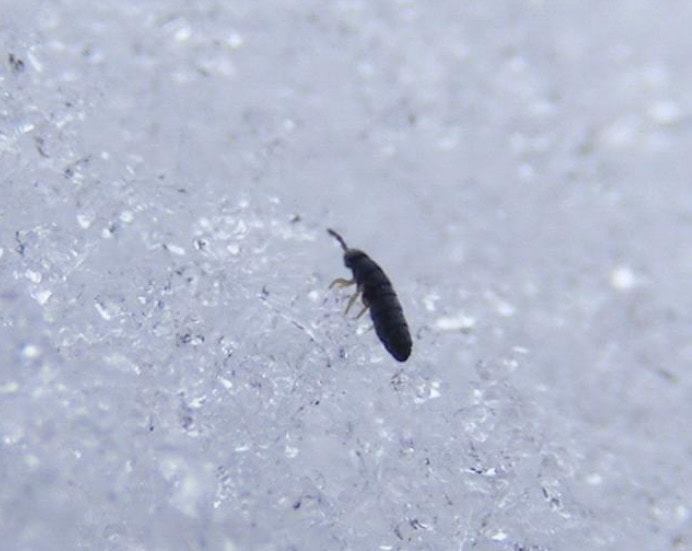
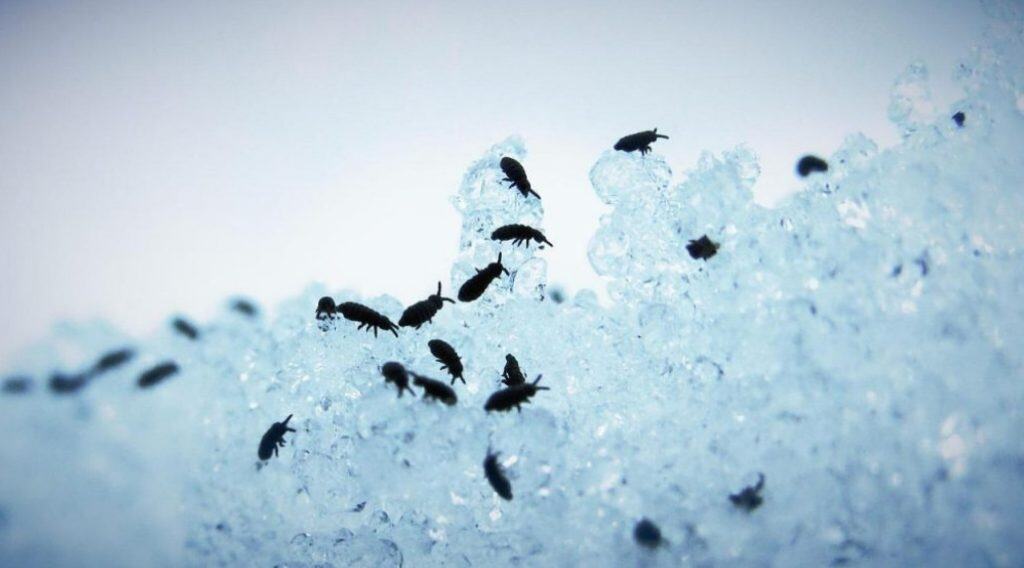
Dark specks are hopping across the snow near your basement. Hundreds of them, maybe thousands. They cluster by the foundation and scatter when you get close.
People call them “snow fleas,” but they don’t bite, and they’re not actually fleas.
They’re springtails—tiny organisms from a group called Collembola. Knowing what they are and why they appear in winter helps you keep them outside.
What Springtails Are (And Aren’t)
Collembola split from the insect lineage millions of years ago. True insects have six legs and usually wings. Springtails have six legs but never develop wings, and they possess unique organs that insects lack.
The organisms measure no more than 2mm long—about the size of a crayon tip. Their dark color makes them visible against snow, and they carry a spring-like tail called a furcula that can launch them several inches when threatened. This jumping ability earned them their “flea” nickname, though the comparison stops there.
They cause no damage to homes, plants, or people. No biting, no disease transmission, no structural harm. They’re soil-dwelling organisms that occasionally migrate indoors when outdoor moisture conditions shift.
Why They’re Active in Cold Weather
Seeing these organisms active in winter seems strange. Most insects hide underground or die off when temperatures drop, entering dormancy until spring.
Springtails evolved differently. They stay active on the coldest days, feeding on algae and fungi growing on tree bark. Researchers found they produce special proteins that work like antifreeze, lowering the temperature at which ice forms inside their bodies.
This lets them move around at temperatures well below freezing, surviving conditions that kill most other small invertebrates. When surface temperatures climb a few degrees above zero, they emerge in massive groups—sometimes millions at once—wandering across snow-covered ground looking for food. The University of Florida IFAS Extension documents this seasonal behavior in detail, noting how springtails time their surface activity to brief temperature windows.
Their activity depends on moisture and they die fast when conditions turn dry. This need for humidity drives everything they do year-round, explaining both their winter wanderings across snow and why they sometimes show up in basements.
How Springtails Enter Basements
Springtails living in the soil around your foundation don’t disappear in winter. They move to wherever moisture levels suit them. And in most cases, when outdoor soil freezes or dries out from winter heating running constantly, their humid environment of choice is your basement.
They get in through foundation cracks, gaps around basement windows, and openings where pipes enter. Basements are cooler and damper than the rest of your house in winter, making them attractive for springtails.
But they are not setting up colonies. They are simply wandering in to look for moisture, nothing more.
And sometimes you can’t see where the moisture is coming from. It can be foundation seepage behind finished walls, condensation forms under floors, or moisture wicking through concrete slabs. A dehumidifier would help, but it would not fix problems hidden from view.
That’s because basement humidity problems aren’t always visible. You fix the obvious leaks, and springtails keep showing up. DIY methods can only go so far. That’s why pest control companies use moisture meters and thermal imaging to find what many would miss.
Managing Moisture: DIY Steps
Springtails are not like your common household pests. Dealing with them is all about cutting humidity. And you can start with what you can fix yourself:
- Run a dehumidifier, targeting 60% relative humidity or below
- Repair any visible leaks around basement windows, pipes, or foundation walls
- Grade soil away from the foundation (aim for a 6-inch drop over 10 feet)
- Clean gutters and extend downspouts at least 6 feet from the house
- Check for overwatered houseplants near basement stairwells or windows
Give it two to three weeks, using a basic humidity meter to track the numbers. You should see fewer springtails as the humidity drops below 60%.
But if you are still seeing them even with lower humidity, hidden moisture is the likely issue. Bringing in professionals is the best option, especially in regions with complicated moisture dynamics.
Midwest basements face unique challenges. Freeze-thaw cycles shift foundations, and groundwater patterns change with seasons. Clay soil, high water tables, and snowmelt all contribute to persistent moisture. Regional pest professionals, such as those at pestprosmi.com, would know how to address the issue.
What Professionals Do Differently
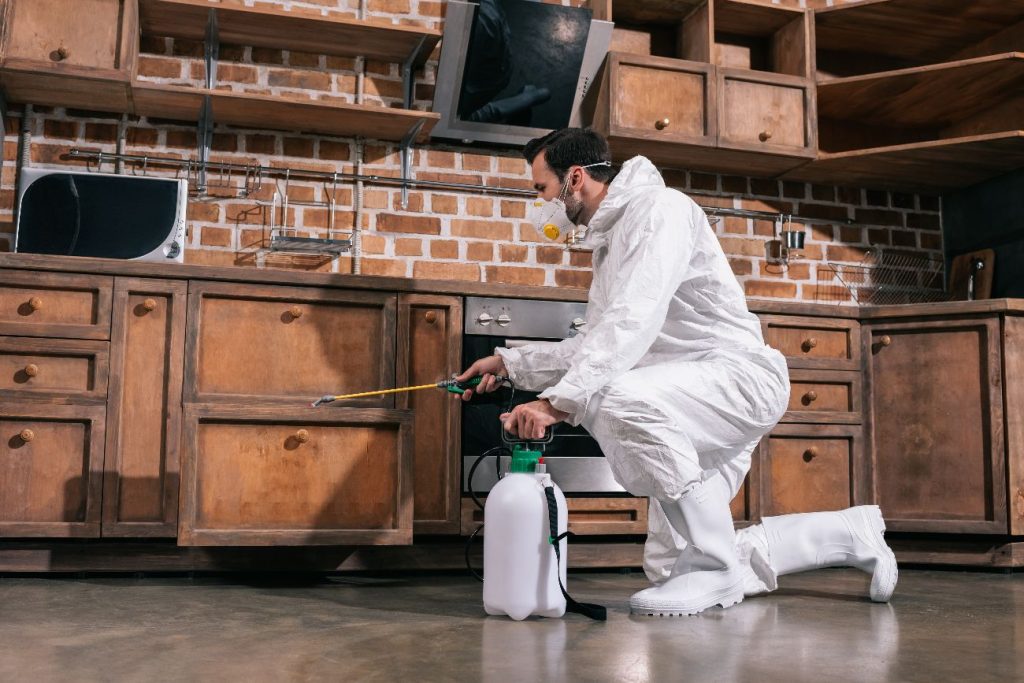
Most homeowners expect an exterminator to show up and spray. That’s not how springtail problems get solved.
Pests that pets bring inside like fleas or ticks need chemical treatment to break their reproduction cycles. Springtails don’t breed in your house; they wander in from the soil outside. So, you can’t treat them like roaches or ants—you need to fix what’s drawing them in.
Professionals trained in Integrated Pest Management won’t spray first. The University of California’s peer-reviewed guidelines state that insecticide sprays are “generally not recommended” for springtails and are “often no more effective than vacuuming.” They provide only temporary relief if moisture conditions remain.
As such, well-trained professionals start by finding where springtails get in. Foundation cracks, gaps around windows, spots where pipes enter walls. They look for entry points you might miss. Then they recommend fixes: caulking, weather stripping, and screening vents. This method stops springtails from entering, not just kills the ones already there.
Chemical treatment exists, but it’s the last option. Professionals can apply pyrethroid insecticides to foundation perimeters. But UC IPM warns these won’t provide lasting control without fixing the moisture issues first.
The applications also need careful handling to prevent runoff into storm drains, leading directly to creeks or rivers. And this is why it’s best to leave chemical treatments to professionals.
Their Role in Healthy Soil
Once you’ve solved the moisture problem and gotten rid of the springtails, you can appreciate what these organisms actually are. Springtails have been around for 410 million years. They were here before flying insects evolved.
They eat decaying organic matter, fungi, and bacteria, breaking down dead material into nutrients plants can use. Their tunneling aerates soil and helps roots get oxygen. Without decomposers like springtails, dead leaves and plant debris would just pile up.
Springtails in your basement mean moisture problems exist. They’re not the problem—they’re the warning sign showing you where humidity has gotten too high.
Fix that before it causes structural damage or grows mold. The springtails are harmless. They’re just doing what works for them: finding damp spots where they can live.
Get rid of the moisture, and you won’t see them inside anymore.