
A mouse does not need a door, it does need a hole of around a dime sized.
Most people do not realise that even seemingly tiny holes are sufficient for rodents to gain access. Once one mouse can access a property, usually more will follow.
Assuming that you have been seeking ‘rodent control services near me’, you are likely to already be noticing evidence of a rodent problem. Nocturnal scratching, a box of cereals with a bitten corner and a musty odour under the sink are just a few examples. It is useful to establish where rodents are coming in as this is key to solving a problem.
Now let’s tour the house.
What Size Gap Can a Mouse or Rat Squeeze Through?
Less than you would think.
Mice can pass through a hole just over a quarter of an inch across – about the thickness of a pencil. Rats require a slightly bigger hole – around half an inch. Rodents are able to compress themselves and chew to enlarge holes.
Yes, rodents do indeed chew. As their teeth are continuously growing, they must constantly gnaw. They will chew through a variety of materials including wood, plastic, rubber and certain foams as well as softer metals. Within a few nights a small hole can develop into a full entrance.
Therefore if your finger can fit through a hole then so can a rodent.
Why Virginia Beach Homes Get Hit
There are several local factors.
Compared to more northerly areas, winter temperatures in Virginia Beach are not as extreme and so rodents remain active for a greater period. Combined with humidity, crawl spaces and garages become moist and this in turn invites rodents in. Many houses possess crawl spaces and vents. In addition, aging house cladding can result in holes developing. Trim can also become loose and items can shift as a result of coastal weather conditions.
Neighbourhood also plays a role. Not only are there wooded areas and marshlands, but there are also busy roads with plenty of eateries and associated bins. Although a house in either Portsmouth or Virginia Beach does not need to be unclean to attract rodents, it does need to be easily accessible.
Where They Usually Get In
Entry points are within the first few feet of a house. However, not always.
Pipe holes are a common point of entry. Examine where pipes (both water and gas) pass through walls particularly under sinks and near water heaters. Often builders will install a loose collar around pipes. Further common points of entry include cracks in a house’s foundations and faulty vent grills. Rats can easily gain access to crawl spaces via torn grill mesh.
Doors are another area to consider. An old garage door can allow a gap to form between the door and frame. Furthermore, check door corners. Shine a torch from within a door at night. If you can see light then again, a mouse can enter.
Also be mindful of dryer and extractor fan vents. Again, rodents can exploit poorly fitting covers or a lack of a flap. Being agile, rats will climb and will use branches, wires and uneven cladding to climb up to a roof level. They will then enter through faulty soffit boards or holes close to roof eaves. Often where cables, electrical and heating/air conditioning wiring enters a house, a gap is left around these.
Take your time. An overlooked entry point can render afternoon’s work redundant.
How to Seal Them Properly
Many domestic solutions are inadequate. Foam and/or basic caulk can be easily chewed by rodents. Utilise substances that are more resistant to gnawing:
- Steel wool or copper mesh inserted into small holes and then secured with caulk
- Hardware cloth (strong mesh made from metal) used to block larger holes and vents
- Metal sheeting to cover areas that continue to attract rodents
- Door sweeps and weather strips for external doors and a new garage door seal
- Cement or mortar to repair foundation cracks
Carry out repairs in daylight and wear gloves. A few days later assess the effectiveness of your efforts. If you spot new gnawing then you have located an area that continues to be probed by rodents.
Make Your Home Less Interesting
As well as preventing entry, reducing a property’s appeal will discourage rodents.
Rodents seek food, water and shelter. Remove at least one of these. Store non-perishable, pet and bird seed in airtight receptacles. Ensure bin lids are secure. Repair dripping taps and outside spigots as rodents will utilise even a trickle of water. Firewood should be stored away from and above ground. Likewise, prune overhanging branches as these can touch roofs and cladding. Shrubs should also be cut back so that they do not affect a house’s foundation. This avoids providing an unseen passage to a wall.
Domestic clutter is similarly appealing to rodents. For example, numerous boxes in garages, sheds and attics provide suitable nesting areas and are less likely to be disturbed.
Whilst none of this is particularly attractive, it is all effective.
Signs You May Already Have a Problem
Often entry points remained open for several weeks before issues became apparent. Look for:
- Black small faeces in cupboards, on dressers and on walls
- Bitten holes in food, wood and wiring
- Nocturnal scratching and/or scuttling in walls and/or ceiling
- Greasy marks on skirting
- Paper and/or cloth used for nesting
- A musty smell in enclosed areas
When cleaning up faeces, avoid using a dry vacuum or broom as this can cause dust to become airborne. Wear gloves and clean the area using a solution of disinfectant. Finally, thoroughly wash your hands.
When It’s Time to Call a Pro
Whilst self-help solutions can effectively resolve limited, initial problems, sometimes further action is required.
If after successfully sealing entry points you still discover recent faeces or continue to hear scratching in a house’s walls or attic then either something is still entering or there are already rodents present. Again, this applies if there are nests, indications of more than one rodent and/or chewed wiring. Moreover, if you are unable to locate entry points then professionals should be consulted.
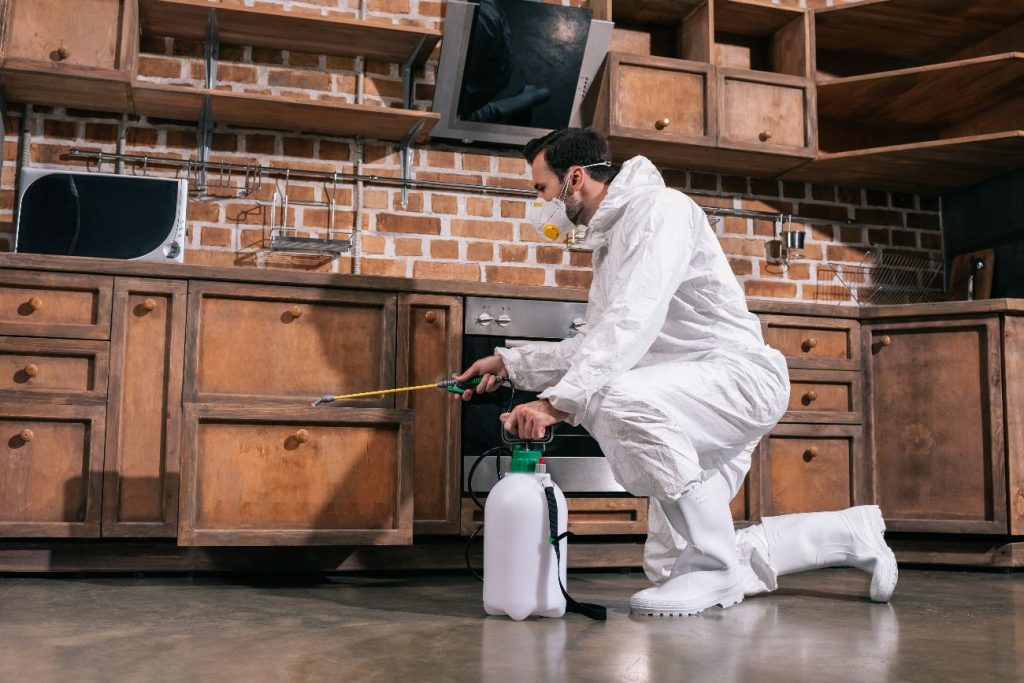
A mice exterminator in Virginia Beach can assist in these scenarios. Skilled staff will conduct a comprehensive survey of a property, including less commonly examined locations such as roof edges and crawl spaces. They will determine how rodents are entering, eradicate existing rodents and suggest ways of effectively excluding future rodents.
In deciding upon a service, enquire as to the scope of the survey, how entry points will be addressed and the nature of any subsequent service. Simply deploying traps is often not a long-term solution as it does not involve sealing entry points and so problems can recur.
One Last Walk Around
On a dry day, carry a torch and slowly walk round the outside of your house. Repeat indoors, ensuring that you examine under sinks, in the garage and around an attic hatch.
Seek out items which do not fit snugly. This includes holes, cracks and ill-fitting covers and seals.
Repair where possible and record areas that cannot be repaired. Rodents frequently exploit slight imperfections and for the most part these can be uncovered within an hour.
Frequently Asked Question
What is the minimum size of hole that a mouse can pass through?
As mentioned above, mice can force their way through a gap of approximately 1/4 inch – about the diameter of a pencil. Rats require a marginally bigger hole – around 1/2 inch.
What is the most effective substance for blocking entry points?
Steel wool, copper mesh, hardware cloth and metal sheathing are all highly effective as rodents find it difficult to chew these. Foam and/or caulk are generally not sufficiently robust.
Why am I still hearing noises even though I have sealed entry points?
It is possible that rodents are already in your house’s walls or attic. Sealing does not expel them. Should continued noise be heard, professionals can investigate and then safely eradicate existing rodents.
At What Times Of Year Are Houses Most Vulnerable To Rodent Entry?
Whilst rodents often become more active during colder periods in search of both warmth and food, they can enter properties at any time. Virginia Beach’s milder climate can result in extended periods of increased rodent activity.
Should I Attempt Self-Help For A Rodent Problem?
Minor initial problems can sometimes be addressed through sealing and cleaning. However, if issues continue then – particularly if there is evidence of widespread problems or wiring damage – it is advisable to consult a qualified pest control professional.