
Uneven floors, sagging beams, and weakened structural supports can create problems inside a house. These issues often become more noticeable during renovations. A suitable support system can help stabilize the structure while repairs take place. However, choosing the right equipment requires more than checking its height or appearance.
House jack posts are adjustable steel supports used to hold structural loads during construction and repair work. They can support basement beams, floor joists, and other load-bearing components. Their adjustable design makes them useful when working with different ceiling heights. But not every model is suitable for every project.
A screw jack post uses a threaded adjustment mechanism to change its working height. This allows workers to position the support beneath a beam or another structural member. Some models are designed for temporary use, while engineered columns can serve different structural purposes. Understanding these differences helps prevent mistakes during renovation work.
Understand Where Adjustable Building Supports Are Needed
Before selecting any support equipment, identify the structural problem. A floor that feels soft may have damaged joists, excessive spacing, or insufficient beam support. A basement beam might also need reinforcement because of changes in the building above it. Each situation requires a different approach.
Building supports are useful in several renovation situations:
- Supporting basement beams during structural repairs.
- Holding floor joists while replacing damaged sections.
- Providing temporary support when modifying load-bearing walls.
- Supporting roof beams during construction.
- Helping stabilize framing while installing replacement columns.
- Adding support beneath areas with concentrated floor loads.
For example, removing an interior wall can change how the building distributes its weight. Workers may need temporary supports before installing a properly designed replacement beam. The supports must carry the expected load throughout the work. Their positions should follow an approved structural plan.
Another common situation involves sagging basement floors. Additional support may help when the problem comes from inadequate beam support. However, adding a post without checking the underlying cause can create further problems. Damaged joists, foundation movement, and weak footings need separate attention.
Explore the Different Types of Building Jacks

Building jacks come in several designs, and each serves a different purpose. Adjustable steel posts support beams and floor structures, while screw jacks allow controlled height adjustments. Hydraulic jacks lift heavy components during construction, whereas bottle jacks handle lifting tasks in compact spaces. Fixed steel columns provide support at established structural points. Understanding these different types of building jacks and their uses helps homeowners select suitable equipment for renovation work.
Here are the main types used in construction and renovation projects.
Adjustable Steel Jack Posts
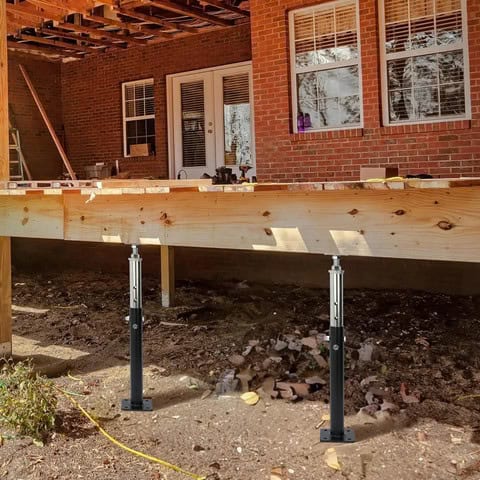
These supports usually consist of two steel sections that slide into each other. A threaded mechanism allows workers to adjust the overall height. Locking pins may secure the telescoping sections at selected positions. They are commonly used for temporary support beneath beams and floors.
Screw Jacks
A screw jack uses a threaded steel rod to control its height. Turning the adjustment mechanism moves the support upward or downward. This design allows controlled positioning beneath structural components. Depending on its design, it may be used in building support systems, scaffolding, and formwork.
Hydraulic Jacks
Hydraulic jacks use pressurized fluid to lift heavy loads. They are often used when workers need lifting force rather than a fixed support. Construction professionals may use them during controlled lifting operations. They should not automatically be treated as permanent structural supports.
Bottle Jacks
Bottle jacks have a compact, upright design. They use hydraulic pressure to lift vehicles, machinery, and other heavy objects. Their smaller footprint makes them useful in restricted spaces. However, their suitability for building work depends on the load, setup, and manufacturer’s instructions.
Fixed Steel Columns
Fixed columns provide structural support without an adjustable telescoping mechanism. Some designs use steel tubes, while others contain concrete. They are commonly selected when a permanent support position has already been established.
The main difference between these options is their intended purpose. A lifting jack raises a load, while a structural column carries it. Choosing equipment based only on its lifting capacity can lead to an unsuitable installation. Always consider the complete support system.
Check the Load Capacity Before Selecting a Support
Load capacity is one of the most important factors when choosing structural equipment. A support must handle the weight transferred through the beam or floor above it. Its capacity can change with its extension length, construction, and installation conditions. A higher advertised capacity does not automatically make it suitable for every project.
Start by identifying the structural member that needs support. Consider the floor area it carries and the weight of the materials above it. Appliances, furniture, partitions, and stored materials can increase the total load. A structural engineer can calculate the required support capacity.
When comparing house jack posts, examine the manufacturer’s load ratings carefully. Check whether the stated capacity applies at the minimum or maximum extension. Some supports have lower allowable loads when extended further. This difference matters when working with tall basement ceilings.
Also examine the surrounding materials. A strong steel post cannot compensate for weak concrete or unstable soil. The load must travel safely from the supported beam through the post and into a suitable footing. Every part of this arrangement affects structural stability.
Choose the Correct Height and Adjustment Range
The height of a support determines whether it can fit properly beneath the structural member. Measure the distance between the supporting surface and the underside of the beam. Take measurements at several points if the floor or ceiling is uneven. This helps identify differences that could affect installation.
A screw jack post provides height adjustment through its threaded mechanism. However, the adjustment range varies between models. Some designs have telescoping sections, while others use a longer threaded shaft. Check both the minimum and maximum working heights before selecting equipment.
Avoid choosing a support that must operate beyond its recommended extension. Excessive screw exposure can reduce stability and affect its ability to carry loads. A support should also remain properly aligned throughout its working range. Follow the manufacturer’s specifications rather than estimating a safe extension.
The adjustment mechanism should also be easy to operate. Workers may need to make small changes during construction. A well-designed mechanism allows controlled adjustments without unnecessary movement. However, adjustment convenience should never replace proper structural planning.
Examine Steel Quality and Overall Construction
Steel construction affects how well a support performs under pressure. Tube thickness, material quality, welds, and manufacturing standards all deserve attention. A post with a poor finish or weak connections may not perform as expected. Look beyond the outer appearance when evaluating equipment.
Check these construction details before making a selection:
- Steel tube thickness and overall dimensions.
- Quality of welded joints and connections.
- Strength of the adjustment nut and threaded rod.
- Stability of the locking pins.
- Condition of the top and bottom plates.
- Protective coatings against rust and corrosion.
The top plate transfers the supported load into the beam or structural member. It should provide suitable contact without creating concentrated pressure in one small area. The bottom plate distributes the load onto the supporting surface. Both plates must match the installation requirements.
A corrosion-resistant finish is also important in basements and crawl spaces. Moisture can gradually damage exposed steel surfaces. Rust may reduce the material’s thickness and weaken important connections. Inspect the coating and surrounding conditions before using any support.
Understand Whether the Support Is Temporary or Permanent
One common mistake is assuming every adjustable support can remain beneath a house indefinitely. Temporary supports and permanent structural columns have different requirements. Their construction, testing, and installation standards may also differ. This distinction is essential during renovation planning.
Temporary supports are generally used while workers repair or modify a structure. For example, they can hold a beam while an existing support is replaced. Once the permanent structure is ready, the temporary equipment can be removed. This prevents construction loads from falling on unsupported sections.
Can a screw jack post remain in place permanently? The answer depends on its specific design, certification, and local building requirements. Ordinary telescoping construction posts should not automatically be treated as permanent foundation supports. Some engineered adjustable columns are approved for longer-term or permanent structural applications.
According to guidance discussed by InterNACHI, column dimensions, corrosion protection, connections, and lateral stability all matter when assessing adjustable steel columns. Different building codes also establish requirements for permanent structural supports. A qualified professional should verify whether a particular product meets the applicable requirements.
InterNACHI®+1
Permanent support may also involve concrete-filled columns, engineered steel systems, or foundation piers. These options serve different structural purposes. A foundation pier, for instance, addresses certain foundation settlement problems rather than simply supporting a floor beam. The correct solution depends on the source of the problem.
Prepare the Supporting Surface and Footing
Even a properly selected support can fail if the surface beneath it cannot carry the load. The bottom of the post needs a stable foundation. Placing it directly on weak flooring, loose soil, or damaged concrete can create serious problems. The footing must be suitable for the expected pressure.
Before installation, examine the concrete for cracks and deterioration. Check whether the supporting surface is level and stable. If the project requires a new footing, its dimensions should follow the calculated structural load and soil conditions. Do not assume an ordinary basement slab can support every concentrated load.
The top connection matters just as much. The post should sit directly beneath the intended beam or structural member. Poor alignment can introduce sideways forces that the support was not designed to handle. Proper connections help prevent unwanted movement.
A stable support system depends on the complete load path. This includes the beam, post, base plate, footing, and underlying soil. A weakness in any part can affect the entire arrangement. That is why foundation preparation should happen before placing the equipment.
Follow Safe Installation and Adjustment Practices
Installing a support post requires careful preparation. Start by reviewing the product instructions and approved structural plan. Make sure the selected equipment matches the required working height and load. Remove obstacles that could interfere with its placement.
Position the support vertically beneath the designated structural member. Ensure its top and bottom plates make proper contact with their supporting surfaces. Secure the required connections according to the installation instructions. Check that locking pins and adjustment components are correctly positioned.
When lifting a structure, adjustments should happen slowly and in a controlled manner. Raising one area too quickly can transfer unexpected stress to nearby framing. This may cause cracks in walls, ceilings, or finished surfaces. A structural professional should establish the lifting sequence and monitor the work.
Never work beneath an unsupported load. Keep people away from the area during lifting operations. Do not exceed the equipment’s rated capacity or use damaged components. If a support bends, shifts, or develops unusual movement, stop work and have the setup inspected.
Inspect and Maintain Structural Supports
Regular inspection helps identify problems before they become serious. Steel supports can deteriorate when exposed to moisture, physical damage, or poor installation conditions. Their adjustment mechanisms may also develop problems over time. A simple inspection can reveal warning signs that require professional attention.
Look for rust, bending, damaged threads, loose connections, and cracked welds. Check whether the post remains vertical and whether its plates stay properly positioned. Examine the surrounding concrete for cracks or movement. These signs can indicate that the support system needs further evaluation.
Pay attention to changes in the building as well. New cracks around doors, uneven floors, and gaps near structural connections may suggest movement. However, these symptoms do not identify the exact cause. A qualified professional should investigate before anyone attempts additional adjustments.
Keep inspection records when supports form part of an ongoing structural project. Note visible changes and any maintenance work. Follow the manufacturer’s guidance for cleaning and corrosion protection. Never attempt to repair a damaged load-bearing component without proper approval.
Match the Support System to Your Renovation Project
The right equipment depends on the work being performed. A small renovation involving temporary beam support has different requirements from a major foundation repair. Start with the structural purpose, then evaluate the equipment’s specifications. This approach helps avoid unnecessary purchases and unsuitable installations.
For basement renovations, consider the beam location, available clearance, and footing condition. When modifying a load-bearing wall, temporary shoring may be necessary before installing a replacement structural member. For floor reinforcement, investigate the joists and existing support arrangement. For foundation settlement, a dedicated foundation repair system may be necessary.
When comparing different support options, consider these questions:
- Is the equipment designed for temporary or permanent use?
- Does its working height match the installation space?
- Is its rated capacity suitable for the calculated load?
- Are the steel sections and adjustment components adequately constructed?
- Can the base and top plates provide proper contact?
- Does the product meet the applicable building requirements?
- Are installation instructions and technical specifications available?
A well-informed decision starts with understanding the actual structural requirement. The strongest-looking product is not necessarily the right one. Correct sizing, suitable materials, and proper installation matter more than appearance alone.
Frequently Asked Questions
What should I consider when choosing house jacks for home renovation?
Consider load capacity, working height, steel thickness, adjustment range, footing requirements, and intended use. Check the manufacturer’s specifications and consult a structural professional before supporting a building.
Can house jacks be used for permanent foundation support?
Some engineered support columns are approved for permanent applications. However, ordinary temporary telescoping posts should not be assumed suitable for permanent installation. Always check product certification and local building codes.
What are the different types of building jacks and their uses?
Common types include adjustable steel posts, screw jacks, hydraulic jacks, and bottle jacks. They support, lift, or position different construction loads. Each type has specific operating limitations.
How do I know what load capacity my support post needs?
The required capacity depends on the structural load, beam arrangement, support spacing, and footing conditions. A structural engineer should calculate the appropriate capacity rather than relying on estimates.
Why is the footing important when installing an adjustable support?
The footing transfers the supported load into the ground. Weak concrete or unstable soil can cause movement even when the steel post is strong enough. Proper footing design is essential for stability.
Final Thoughts
Choosing structural support equipment requires careful attention to the building’s actual needs. Height, load capacity, steel quality, and footing conditions all affect performance. Understanding the difference between temporary supports and permanent columns is equally important.
A suitable support system can make renovation work safer and more manageable. However, no adjustable post should replace proper structural assessment. Review the equipment specifications, follow installation instructions, and involve a qualified professional when structural changes are involved. This approach helps protect the building throughout the renovation process.